


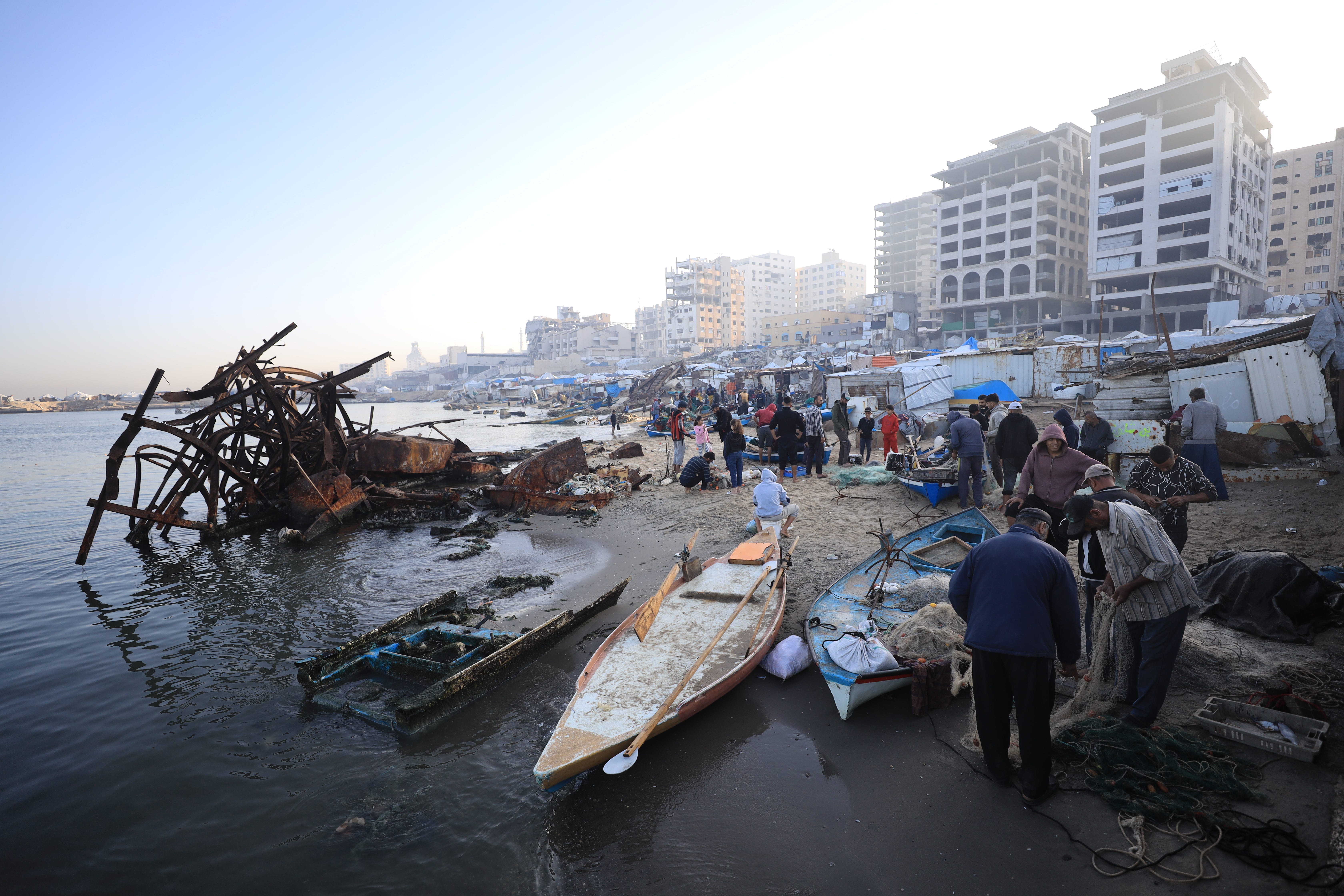
Gaza’s fishermen have always lived between uncertainty and saltwater. But after two years of relentless assault, siege, and the destruction of an entire coastal economy, the horizon itself has changed. The sea — once Gaza’s only open space, its final refuge — is now a frontier of fear, loss, and stubborn survival.
Three fishermen abducted at sea during a supposed ceasefire, Khaled Yousef Shamla, Hassan Jamal Al-Numan, and Mahmoud Saeed Al-Saeedi, became the latest reminder that the attacks never truly ended. Israeli naval forces continue to impose tight, often deadly restrictions on Gaza’s ruined coastline.
This feature documents the reality of Gaza’s fishermen today through intimate conversations with three men whose lives have been shaped and shattered by the sea.
“We’re like fish — take us out of the sea, and we drown.”
“We returned to the sea like our grandfathers — with nothing.” Nahed Al-Amoudi, 51, a fisherman for 40 years. “Our origins are in the city of Jaffa, which was famous for its fishermen,” he says.
When Nahed describes post-genocide fishing, he calls it a “return to the primitive.” “We’re back to the way our ancestors fished,” he says. Nets patched by hand, tiny wooden rafts, no motors, no fuel, no gear. “Our boats now require around 200,000 dinars just to operate and sail.”
Long before the current genocide began, Gaza’s fishermen were already navigating a sea of danger. Confined to a narrow strip of just 7 to 10 nautical miles, they faced constant Israeli naval harassment — including shootings, abductions, and even killings — all within so-called “approved” fishing zones.
Today, even casting a net just metres from the shore can mean risking their lives. The routine is brutal. They set their nets at night, leave them in the water, then return at dawn hoping the waves — or the genocide — have not swallowed them.
“Every day we put our lives in our palms,” Nahed says. “When I go out, I’m not sure I’ll return. Death is 99.9%.”
The port lacks basic cleanliness, especially along the shore. Small boats need proper storage and protection because they may sink during winter storms due to tides. “Our situation is extremely difficult; every bite we take is stained with the cost of pain and struggle.”
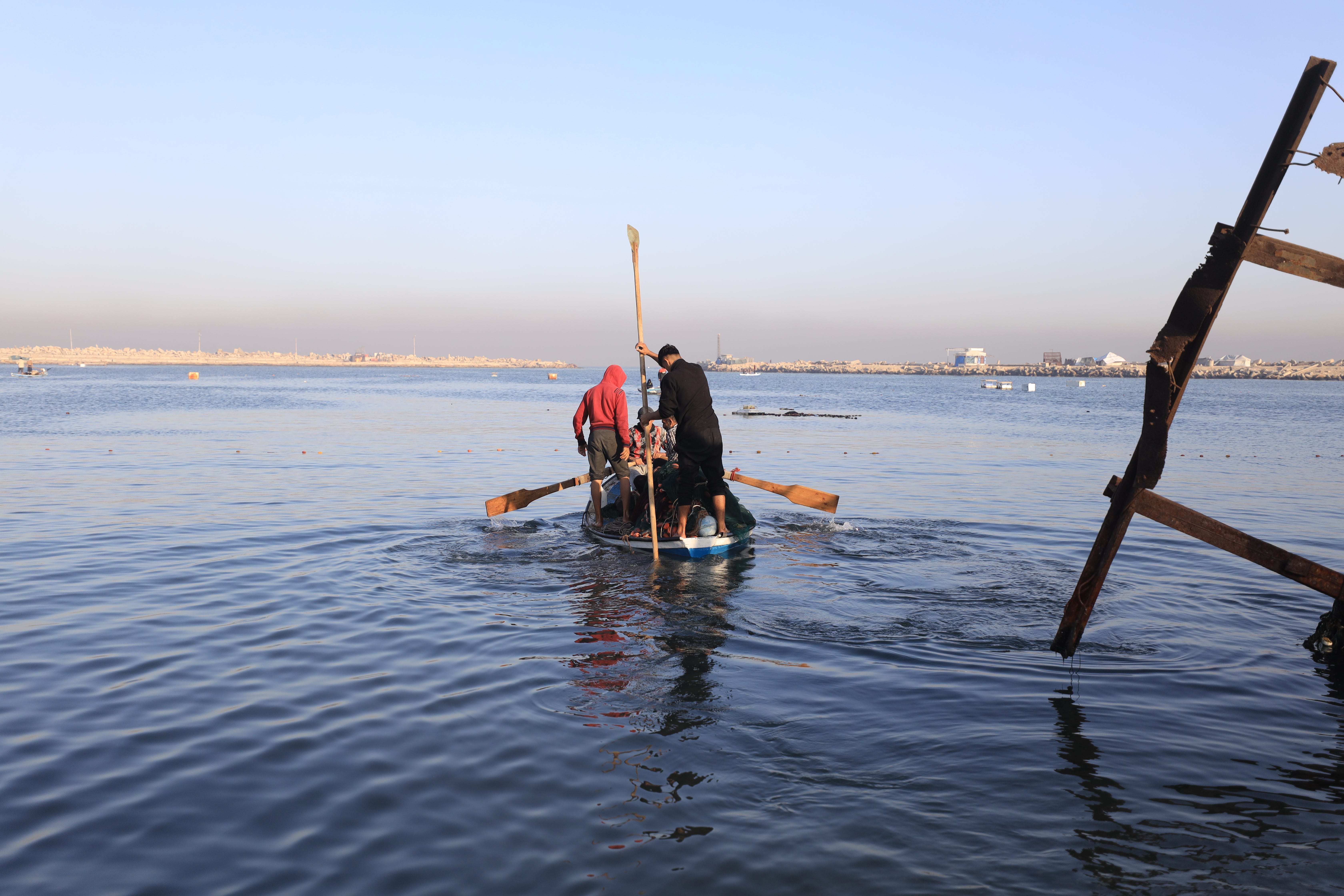
The price of fish has skyrocketed since the genocide began: shrimp now sells for $60-90 per kilogram, sometimes more when it’s scarce. It even reached $300 per kilogram during the genocide in the absence of chicken and meat.
But for Nahed, the moment he returned to the sea after the ceasefire was not about money. “ I want to live. The sea is my whole life; it is survival.”
“When we make a big, blessed catch, we remember every detail — the date and the hour — because the joy of a good catch is unforgettable,” Nahed continues, “even the painful memories remain carved into our minds.”
Amid the genocide, he has never been displaced to the south. Many memories haunt him. Israeli tanks and gunboats firing during his fishing runs. Fishermen dying beside their nets. But nothing, he says, will keep him away. “We’re like fish — take us out of the sea, and we drown.”
He has five children who call constantly to make sure he is alive. He works also as a tailor when needed, but the sea, he says, “is in my blood.”
“The sea taught me patience. But it also took my son.”
“The sea taught me patience. But it also took my son” the 65-year-old fisherman Ishaq Al-Hissi told me.
“Before the war, we had big boats, engines, gear, nets, a fishermen’s union. Now — nothing.” Their boats were bombed, burned, or confiscated. Their nets shredded. Their fishing grounds shrunk to a narrow strip patrolled by Israeli gunboats. Now, thirty fishermen share one small boat. The income is not enough to cover even a day’s needs.
The danger is still ongoing. “We are constantly hunted by the IOF, which is our greatest challenge,” he says. Five of his relatives have been illegally abducted by the occupation forces for fishing.
The greatest loss, though, is his eldest son Mahmoud, 29. Mahmoud was fishing near the shore on 16 January 2024 when Israeli forces targeted the area. He was killed instantly.
“The greatest suffering is losing your child. Money can be replaced — lives cannot.”
Ishaq’s first return to the water after the war was devastating. “It was a painful day,” he says quietly. “The sea now reminds me of my son.”
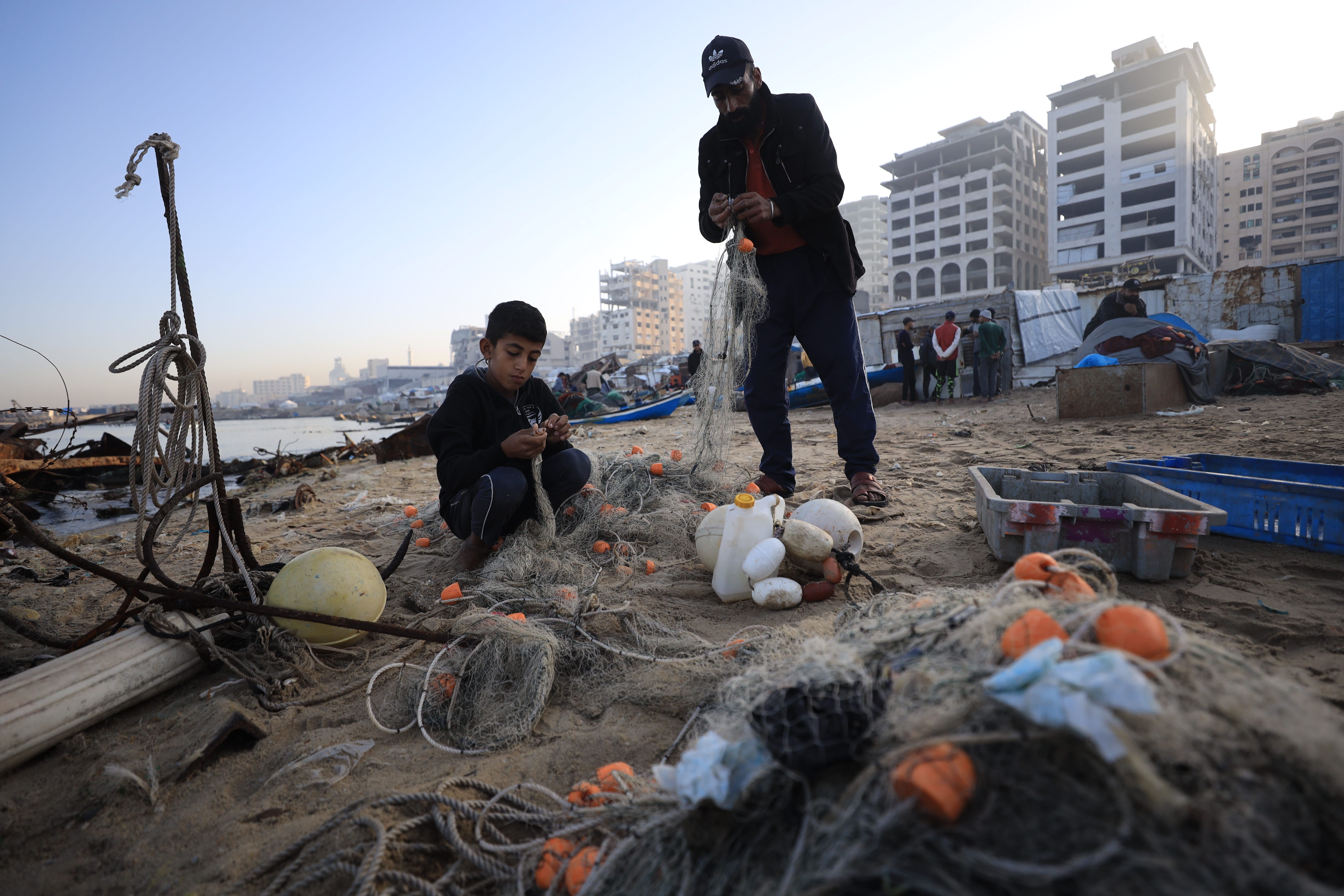
His daily challenges are existential, “I weigh two possibilities before sailing: either I live and bring food to my children, or I die so I don’t have to watch them starve.”
He describes Gaza’s port today as “zero percent operational.” Around 700 small boats have been destroyed. None of the heavy equipment, engines, or shelters fishermen need to survive exist anymore.
The economy is shattered. Even though fish prices are slowly dropping, the people’s purchasing power has collapsed. Only the wealthy can afford to buy fish.
But Ishaq remains tied to the sea.
“Fishing is in our blood. My father spent 80 years doing this,” He said. “My longing, my love for the sea… and our children who died in it — that is what brings me back to the sea.”
“As a fisherman, my favourite fish are sardines — they stay in the body for a long time and are highly nutritious,” he says.
Ishaq explains that fishing requires endurance and resilience. He quotes a verse of an Arabic poem: “My livelihood lies between shores and water, where fish glitter like light. I seek them morning and evening, and thus I live my life grateful to the Lord of the skies.”
“If not for hunger, we wouldn’t have returned to the sea.”
“We fish because we are hungry.” 36-year-old fisherman Ahmed Al-Hissi tells me. “If not for hunger, we wouldn’t have returned to the sea,” he admits.
For Ahmed, a fisherman since childhood, the sea no longer represents livelihood — only survival.
The equipment they use now is so primitive that it injures their bodies. “Everything is manual — the paddling, the lifting, the dragging. We’re getting spine and cartilage diseases.”
Most small boats available now belong to aid-funded projects, where owners receive a share, and fishermen receive a share.
Before the genocide, Gaza’s larger boats could return with 10 tons of fish on a good day. Now, they only get one ton a day; each fisherman catches 2–3kg— barely enough to sell, let alone eat.
And the cost of fishing itself is suffocating. A small wooden boat that once cost $600 now costs $25,000. Even the nets that cost $24 before now cost $3030.
“Whatever we earn goes back into repairing boats and nets. The sea’s money stays with the sea.”
Ahmed’s family has also been torn by illegal arrests: His brother, nephew, cousins, and neighbours were all captured by Israeli forces in November 2025 while fishing near Gaza’s northern waters.
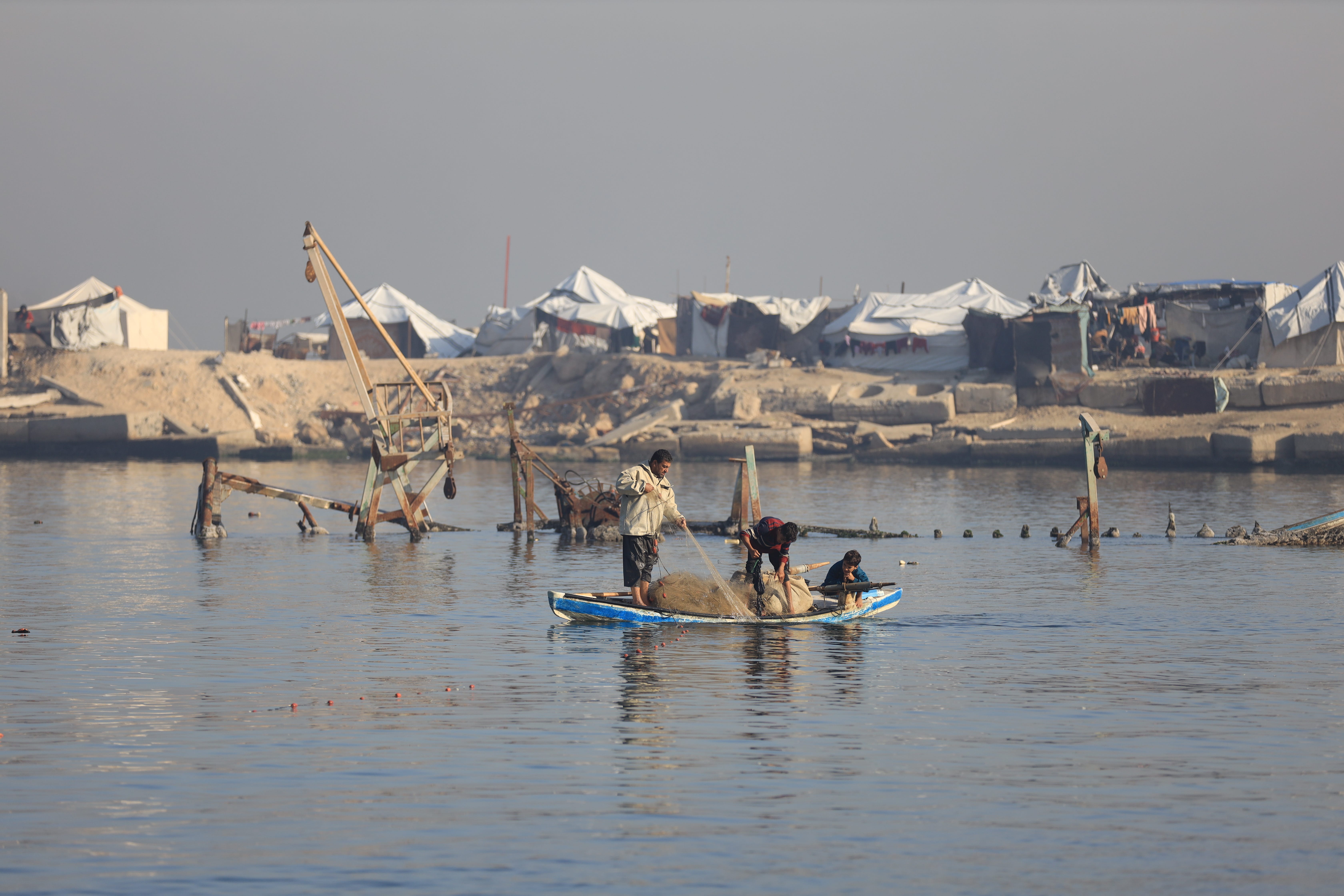
Prices are now slightly more reasonable. The most expensive fish types are shrimp, calamari, and al-Habbari — all very rare. Crab is now cheap at $6 per kilogram. Ahmed’s favourite fish is called “al-Qaras” — known by Qataris as “Abu Shoka.” It is not caught every day.
“To rebuild Gaza’s port will take 10 to 15 years,” he says. “We need dredging equipment, new boats, everything.”
Despite all the challenges, he refuses to leave the profession. “Fishing is everything we know. It’s who we are. We have been fishermen since before the Nakba, back in Jaffa.”
For now, Gaza’s fishermen continue to push their fragile crafts into dangerous waters. With every dawn, they choose life again because they have no option — even when the world looks away.

Loved the poem you quoted.