


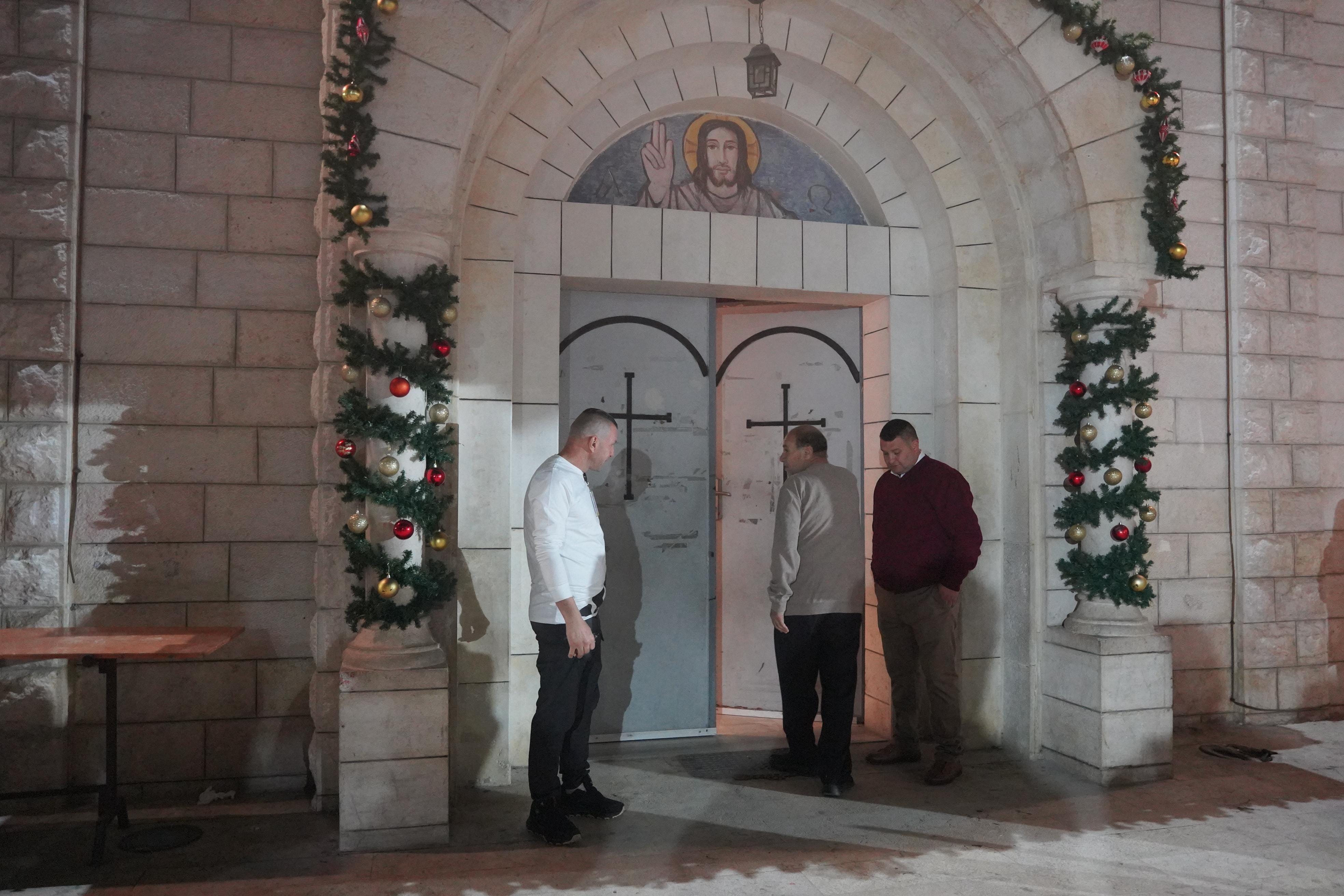
In Gaza this year, Christmas arrives stripped of its core: joy. Prayers are still murmured, candles still glow in the shadows, and churches—some damaged, some barely intact—remain standing. Yet the spirit of celebration is missing, overshadowed by a grief too heavy to carry. For Gaza’s dwindling Christian community, Christmas is no longer a time of gathering or celebration, but a reminder of what—and who—is no longer there.
On 24 December 2025 night, I went to the Holy Family Catholic Church in Gaza City, where the mass was held, and the hymns were recited. I spoke with three Christian people and asked them to provide me with how Christmas feels this year. They shared with me how they prepared for Christmas in previous years, and how this year is different by describing for me the atmosphere of this night.
“Our priest gave us gifts — I’m really grateful for his love and kindness”
Jehan Tarazi, 11, one of many children from Gaza’s Christian community who have been living through displacement, siege, and deep loss. Like many, she carries the weight of memory.
“We had so much fun decorating the tree and the church,” Jehan says eagerly, “but if the genocide hadn’t happened, and if we hadn’t lost anyone, we would have been even happier.”
“We’re really happy we got to celebrate the glorious birth of Jesus,” she says with a smile. “I miss the people we lost from the church,” she adds. “They used to sing with us during mass… I wish they were still here.”
This year, like many others, her family couldn’t travel to see relatives due to the ongoing siege. The separation is painful.
“We can’t celebrate safely or without fear. We couldn’t travel to be with our relatives because of the situation.”
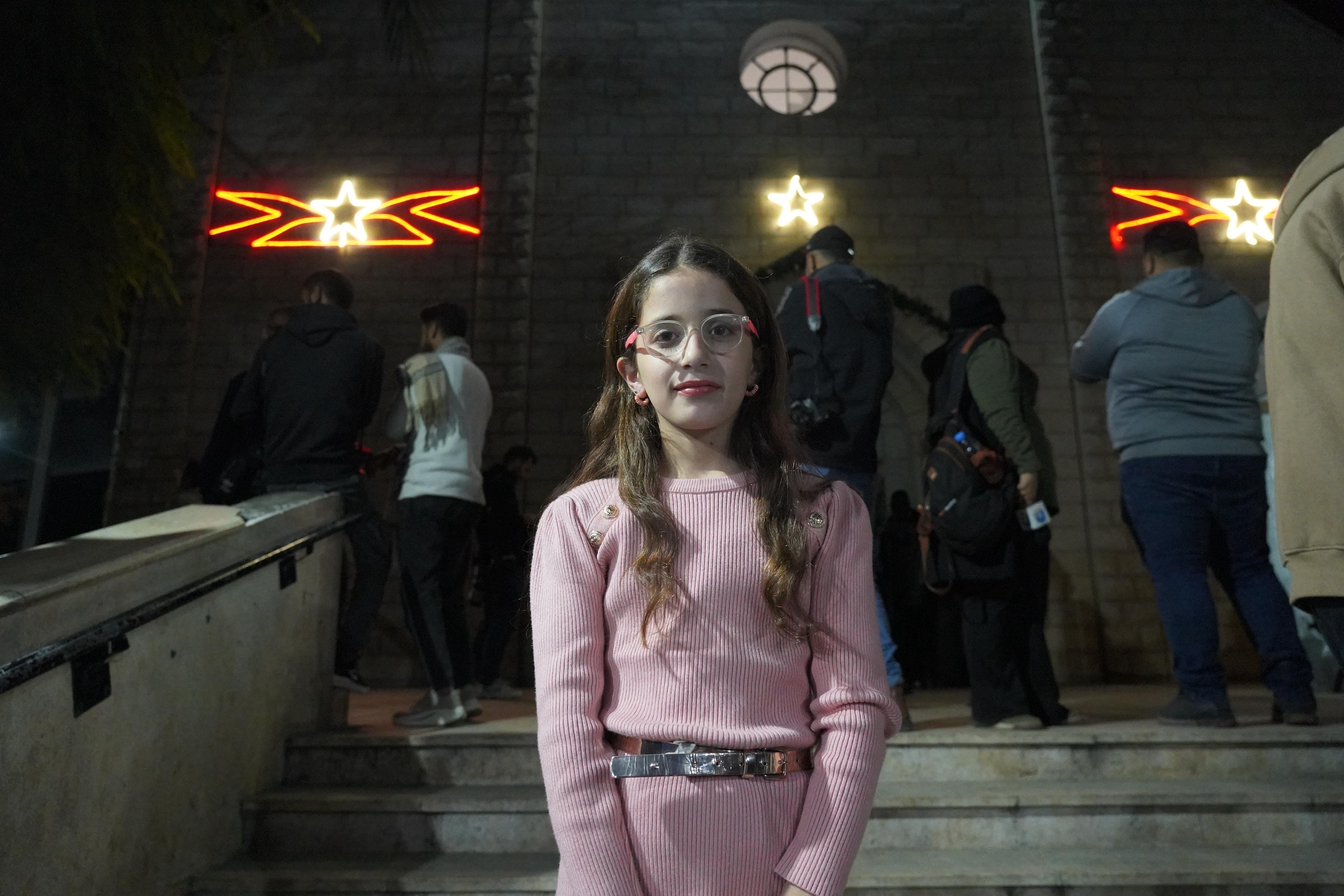
Despite everything, Jehan remains thankful.
“Our priest gave us gifts — I’m really grateful for his love and kindness.”
When asked what she wishes for, Jehan’s words carry the kind of clarity only a child can offer: “I hope life goes back to normal. I wish this genocidal war was just a dream and we hadn’t lost our loved ones, and I hope the genocide never comes back. I also hope next year will be better, that Gaza will be okay, and we’ll have rebuilt it.”
“Praying in the Church of the Nativity, where Christ was born, has a special meaning, just like the first time a Muslim prays in Al-Aqsa Mosque”
At 31 years old, Yousef Tarazi never imagined celebrating another Christmas under siege. A member of Gaza’s Christian community, Yousef now finds himself living, praying, and working inside the same church where he once celebrated the birth of Christ in joy — but now, he does so as a displaced person, with his life packed into plastic bags.
“This year is especially hard,” he begins. “After two years of genocide, we’ve lost everything — friends in the attacks on Gaza’s churches, our homes, our sense of stability. Many Christians are still displaced, using the church as a shelter.”
Some families, he says, returned to their damaged homes and came to mass dressed in their finest, attempting to honour the holiday spirit. “But I’m still here, in the church, with no privacy or independence. I sleep here, I work here, I pray here. I don’t feel like I have a life anymore.”
Yousef speaks with the weight of grief. Before the genocide, Christmas was full of spiritual warmth. His community would travel to Bethlehem and Jerusalem, cities deeply connected to the Christian faith, to pray and gather. “Praying in the Church of the Nativity, where Christ was born, has a special meaning, just like the first time a Muslim prays in Al-Aqsa Mosque,” he says. “It’s ours. Who is the occupier to deny us the right to pray in our own sacred places?”
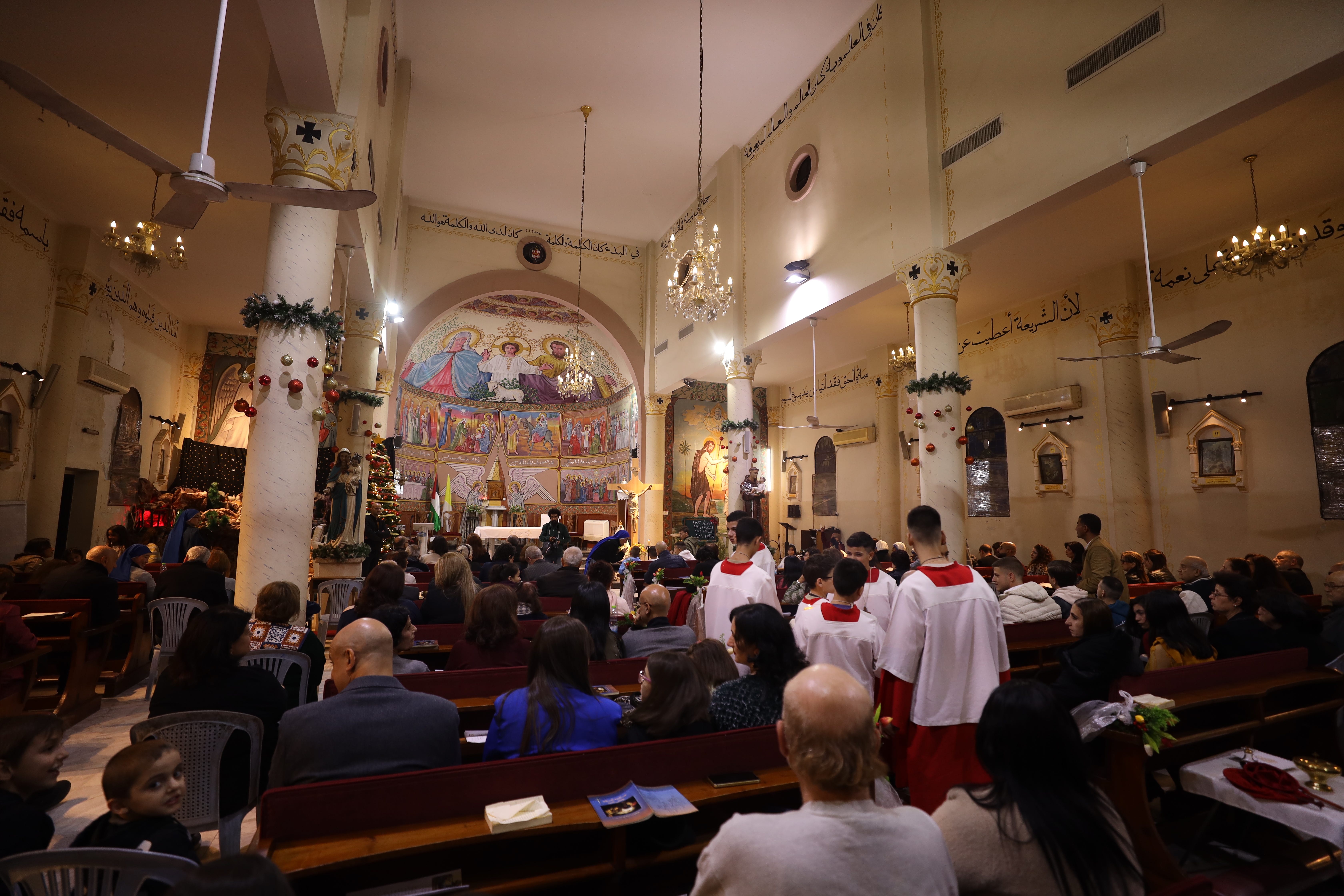
After prayers, the celebrations would continue with social visits and community gatherings — all now lost to the sound of drones and displacement.
“I miss my friends so much. I still remember them… but I don’t feel peace anymore. I want to live a new life,” he expresses.
When asked what message he’d like to send to the world, he pauses. Then, with striking honesty, he says: “I don’t even know what language the world understands anymore, to be honest.”
“We Used to Dance and Visit Each Other. Now We Just Try to Heal”
For Fouad Al-Najjar, 13, Christmas this year feels like no other. It’s the first in Gaza since two years of genocidal war — and although there is a temporary truce, the absence of peace is unmistakable.
“This Christmas feels completely different,” he says quietly. “After two years of genocide, with all the destruction and lack of resources, we’ve lost so many loved ones — people we used to be happy with, people who stood by our side with love and peace between us.”
Before the genocide, Christmas in Gaza was filled with life. A massive tree stood proudly in the church courtyard. Families would visit each other’s homes, exchange greetings, sing, dance, and play games like Bingo. They would travel to Jerusalem and Bethlehem to pray at the Church of the Nativity and the Church of the Holy Sepulchre — sacred rituals now blocked by siege and separation.
“Now we can’t do any of that. We used to put up a huge tree in the yard, but now it’s just not here anymore,” Fouad explains. “We can’t go visit each other, and even though there’s a ceasefire, it hasn’t brought peace. They still shoot sometimes.”
Despite displacement and loss, the Christian community has found quiet strength. “Even though many of us are scattered and displaced, we didn’t let that stop us from celebrating,” he says. “This year, the Christmas celebration was only a prayer and a small gathering in the yard of the Holy Family Church.”
Fouad sees value in this togetherness — even when everything else has fallen apart. “Being next to each other and supporting one another helps heal a little bit of the pain from losing people.”
When asked what he misses most, his answer is simple and powerful: “I miss peace the most. And the people we lost. And visiting family.”
Christmas in Gaza no longer arrives with the certainty of joy or the comfort of tradition. It comes fragmented, held together by memory, faith, and an unyielding insistence on dignity in the face of erasure. For Gaza’s Christians, the holy season has been reduced to its barest essence: prayer without celebration, gathering without safety, and hope without guarantees. What remains is not silence, but a quiet resistance and a refusal to let faith, identity, and community be extinguished alongside homes, churches, and lives.
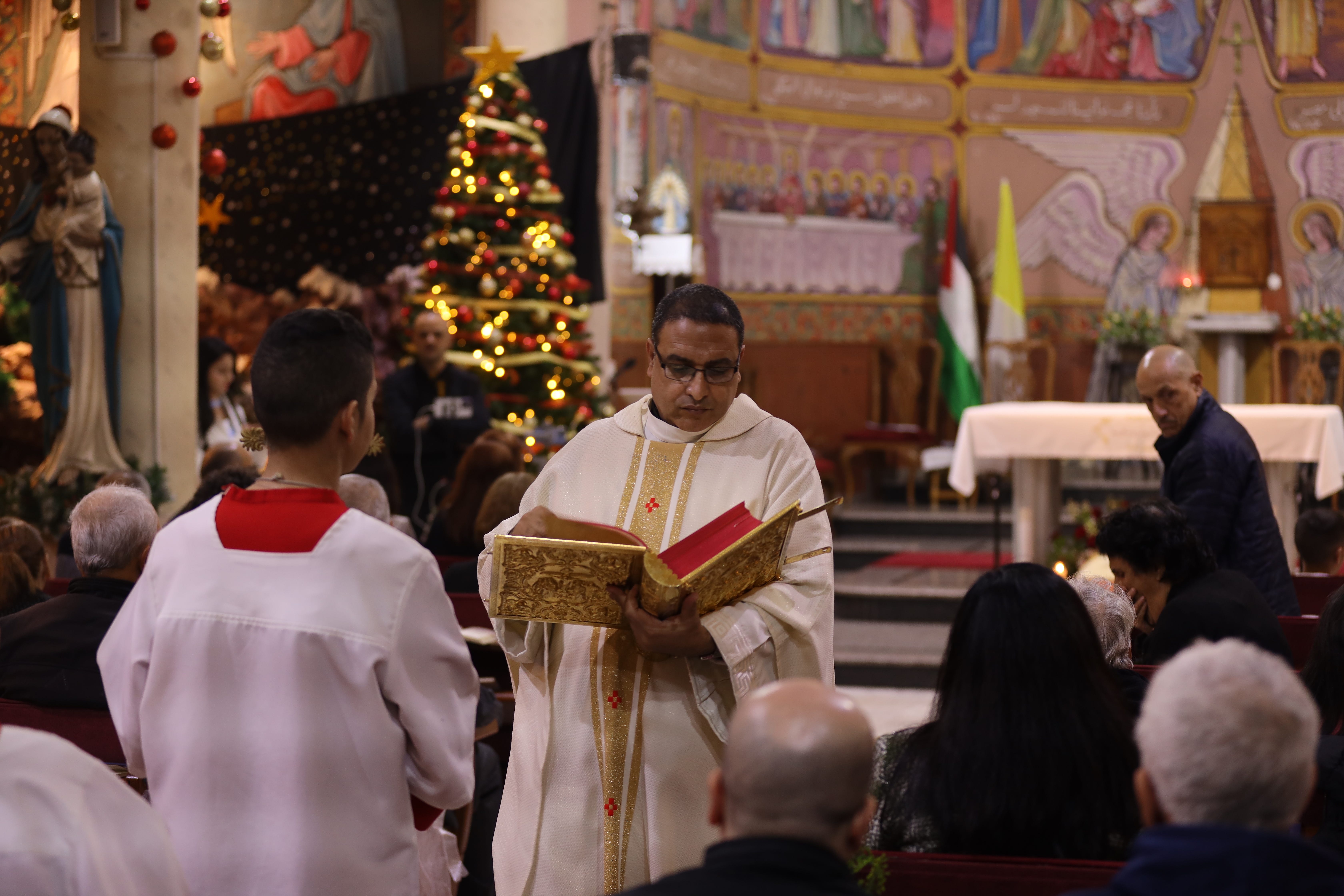
The testimonies of Jehan, Yousef, and Fouad reveal a shared truth across generations: that loss has reshaped the meaning of Christmas itself. For children, it is a season haunted by absence; for adults, a reminder of stolen stability and denied sacredness; for families, a time marked by separation rather than reunion. Yet within this devastation, there is a persistent act of holding on. Candles are still lit. Hymns are still sung. Prayers are still whispered beneath damaged ceilings. These acts may seem small, but in Gaza, they are profound declarations of existence.
What Gaza’s Christians ask of the world is neither pity nor symbolic gestures. They ask to be seen fully—as a living community, not a vanishing one; as people of faith whose sacred spaces are targeted, whose traditions are interrupted, and whose losses are ongoing. Their Christmas is not a story of seasonal sorrow alone, but a reflection of a broader Palestinian reality under siege: one where ceasefires do not guarantee safety, where survival itself is an act of defiance, and where faith becomes a refuge when everything else collapses.
In the shadow of genocide, Gaza’s Christians celebrate Christmas not because the wound has healed, but because abandoning it would mean surrendering memory, belief, and identity. Their silent joy is not forgetfulness—it is endurance. And in that endurance lies a question the world cannot continue to ignore: how long will faith be asked to carry what justice refuses to hold?

Thank you Huda
my heart is with you all, I so well understand and share Yousef's comment: “I don’t even know what language the world understands anymore, to be honest.” It is thoroughly unimaginable that the world can stand back as this GENOCIDE continues, we share your tears and disappointment and like you continue to speak up for PEACE AND JUSTICE.
Sending love and prayers of protection to you all for these holy days
Before the genocide the occupation, funded by their western “Christian” imposters, couldn’t deny Palestinians the warmth of Christmas.