


I didn’t suddenly feel like an adult. There was no dramatic moment, no sense of arrival. But something inside me changed—slowly, painfully, and permanently.
A few days ago, a friend mentioned that only twenty days remained until my twentieth birthday. I laughed, unsure how I was supposed to feel. The genocide began when I was seventeen. Then came eighteen. Then nineteen. Now, I am approaching twenty, carrying years that were never truly lived. From January 31, 2006, to January 31, 2026, my age increased—but my life was interrupted. I exist between the person I was before everything collapsed and the person I am still trying to become.
I have changed so much that I sometimes don’t recognise myself. At seventeen, I wanted to understand everything—people, injustice, the world. I chased truth relentlessly. Now, I often retreat from it. Not because I stopped caring, but because awareness came too violently. Knowledge arrived through trauma.
Growing older frightens me, not because of the number, but because of what it contains. I never imagined that three years of my youth could be erased this way. I once believed turning twenty would bring clarity and direction. Instead, it brings uncertainty. As I approach finishing my bachelor’s degree in August 2026, I face a painful choice: Should I accept scholarships and study abroad, leaving my family behind in constant danger? Or should I stay, choosing responsibility and presence over a long-held dream—to study, even briefly, outside Gaza?
Those who know me know that I am ambitious. I don’t compete with others; I compete with who I used to be. I balance calm with strength, sensitivity with reason. I believe ethics are the foundation of all relationships, which is why I strive to treat people with honesty and respect. I value simplicity and reject pretence. I prefer to live as I am, without masks. I am kind by nature, and I once assumed the best in everyone—but experience taught me that kindness does not require self-erasure, and that boundaries are necessary for self-respect.
I do not settle. I seek growth even when the path is unclear. I stumble, doubt, and break—but I do not give up. Failure, to me, is not an ending but part of learning. Success matters not for recognition, but for knowing I stayed true to myself. I endure with patience, even when grief and fear overwhelm my inner world.
Reshaping
Family remains my anchor, the last reliable source of safety in a life shaped by instability. I cherish those who stand beside me in the hardest moments. This genocide has reshaped me in ways language cannot fully hold. Oh, hurried age - you betrayed me. You placed burdens beyond my capacity and denied me the chance to complete my childhood. Gaza, often called the world’s largest open-air prison, was always a place I loved. But genocide introduced a constant sense of suffocation, as if even love became trapped behind walls.
Loss stopped being rare and became routine. On October 15, 2023, Israeli forces bombed the home of my closest friend, Shimaa Saidam, killing her and most of her family. Soon after, Lina al-Hour and her family were killed on October 27. Mayar Jouda on October 31. Asmaa Jouda on May 24, 2025. On November 1, 2023, missiles destroyed my uncle’s home, killing his wife Neveen, my aunt Asmaa, and my two-month-old cousin Fatima. By the end of that year, my grandfather’s four-story home was flattened. My uncle Abd al-Salam and his children, Huthaifa (13) and Hala (8), were killed. I also lost professors and teachers I deeply respected.
Loss extended beyond people. It took homes, routines, places, memories, and parts of my identity. My mind became heavy with images and knowledge it was never meant to carry.
And yet, something human survived. I held onto education, reading, and writing—anything that could keep me from collapsing. Writing became both refuge and resistance. I wrote constantly. Through it, I became a writer, poet, and editor. My work reached audiences beyond Gaza. Education became my quiet weapon against erasure.
Nineteen years of survival taught me lessons no classroom could offer. I learned that strength lies in acceptance, that happiness belongs to pure hearts, and that kind people are life’s greatest blessing. I am no longer who I was—not because I weakened, but because I matured. I now choose silence over justification, calm over confrontation, distance over emotional exhaustion. I protect my peace. I no longer wait for apologies or explanations.
Achievements
Achievement now means something different to me. Why don’t we record, as achievements, what we endured during the genocide? The hunger that taught us how to ration hope. The displacement that stripped “home” of its meaning. The fear that followed us into sleep and woke up with us each morning.
Why don’t we honour the nights we survived under bombardment, the hours spent waiting for news that could destroy us, the days when simply staying alive required strength beyond measure?
Why don’t we document how we learned to live with loss as a constant presence? The first day without a friend. The moment we received news of martyrdom. The numbness, the silence, the shock. We learned to memorise final voice notes, photos, and messages. We learned how to carry names that would never answer again.
Why don’t we recognise how we mourned places—the homes where laughter once lived, the mosques, the schools, the universities, the rooms where dreams were first spoken? We learned to grieve memories buried under rubble and to accept that entire chapters of life could disappear overnight.
We carried responsibilities far beyond our age. We became emotional shelters for others while having none ourselves. We learned to hide panic to comfort younger siblings, to appear strong before our parents, and to break down in silence. We endured exhaustion, repeated displacement, and constant uncertainty. We lost people, routines, futures, and versions of ourselves.
We learned under bombardment. We studied while classrooms disappeared and death hovered overhead. Learning became defiance. Education became survival. Every page read and every word written declared that we would not be reduced to victims alone.
Collapse of certainty
We lived through the collapse of certainty. We held onto dreams while genocide tried to erase us—not only physically, but emotionally and culturally. We insisted on hope when despair was logical. We imagined futures even when tomorrow was not guaranteed.
We continued forward without knowing whether morning would come. We built fragile routines inside chaos. We carried grief quietly to survive. We learned patience without limits, endurance without recognition, grit without rest. We grew older than our years and stronger than our circumstances.
These experiences were not chosen. They were imposed by violence. Yet they gave us skills no certificate can measure: patience shaped by loss, strength built through survival, emotional depth forged by grief, and a refusal to lose our humanity.
If achievements were measured honestly, endurance would come first. Survival would be honoured. And remaining human—still able to dream beyond genocide—would be the greatest achievement of all.
Twenty is not an answer. It is the beginning of an unresolved question—and I am ready to live it. Welcome, my twentieth year. Please bring safety and peace with you. They are feelings I have missed more than words can express.
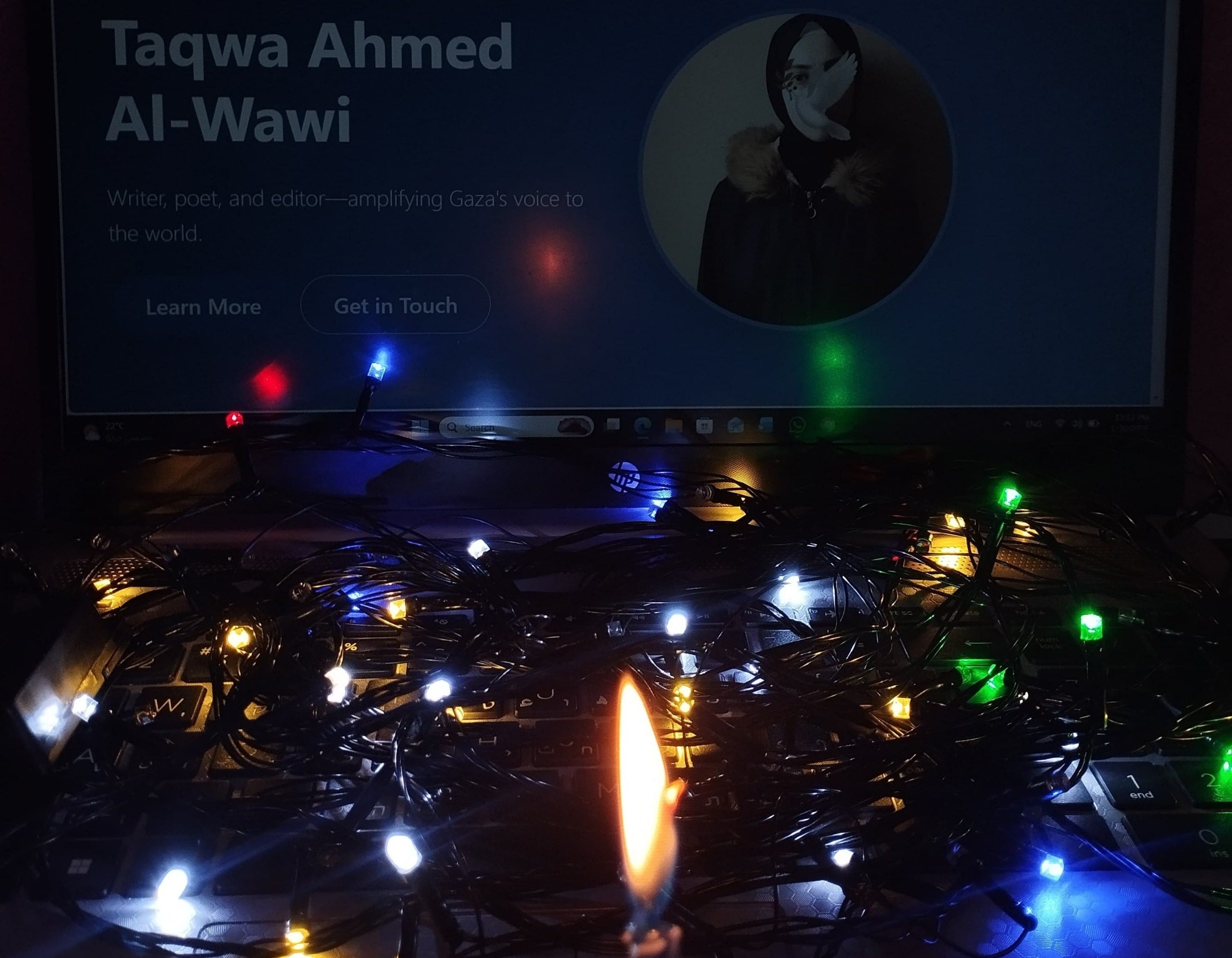
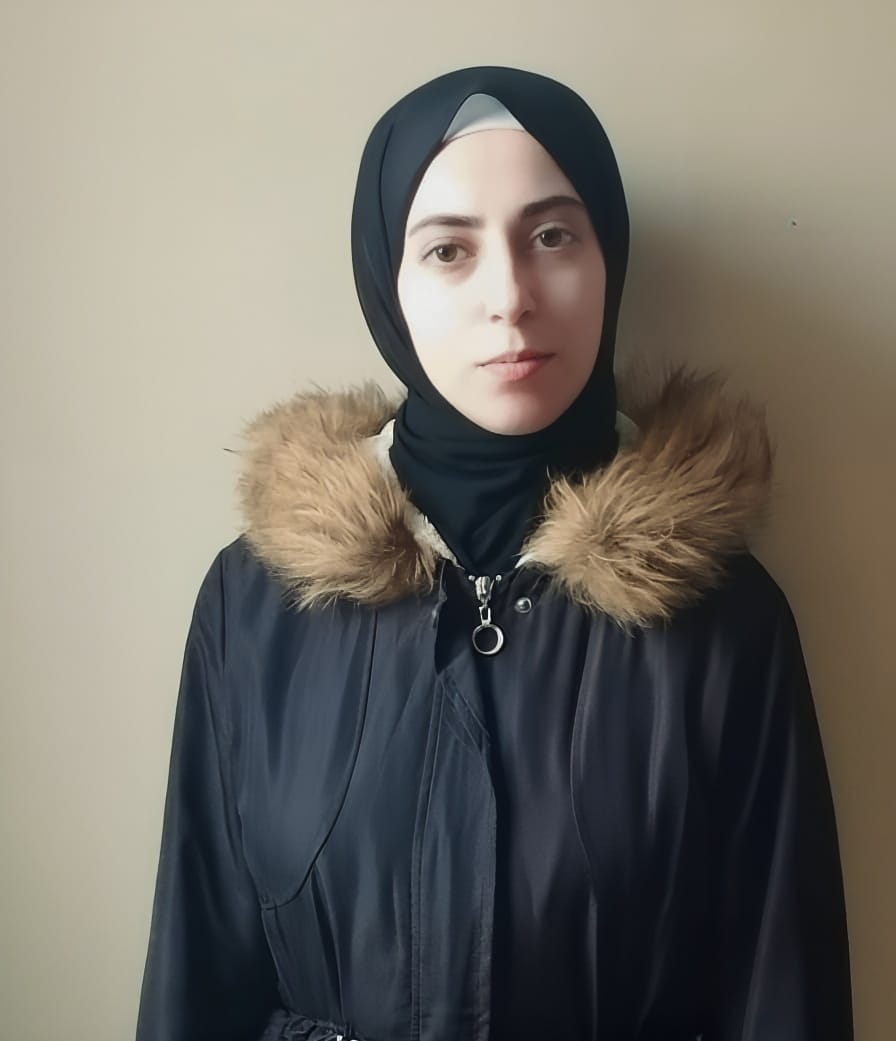
Taqwa Ahmed Al-Wawi is a Palestinian writer, poet, and editor based in Gaza, dedicated to amplifying Gaza’s voice and bringing to light stories too often left untold. Her work has been featured in leading international platforms. Her portfolio: https://tqwaportfolio-project.netlify.app/

Taqua,
Please continue to hope. I and many others are praying for you and for the Palestinian people.
Thank you so much Taqwa Ahmed Al - Waur !
You have so much wisdom to bring the world. I cried when I read what you have written. I am 75 years old, living in Denmark. My son and his wife are seek and poor, but my country is rich.
My country did not helped you Palestiniens as they should have done. It is so shamefull.
I went for the Palestinien demo every week in my town and I have met your brave people there. You and your people are the truth hope for a better world.
I hope the best for your Bachelorgrad in August 2026. I do not understand where you get all your strenght from, but I know that you and your people have a strong wisdom and love, a very fine spirit and humanity. The world needs you. Thank you !