


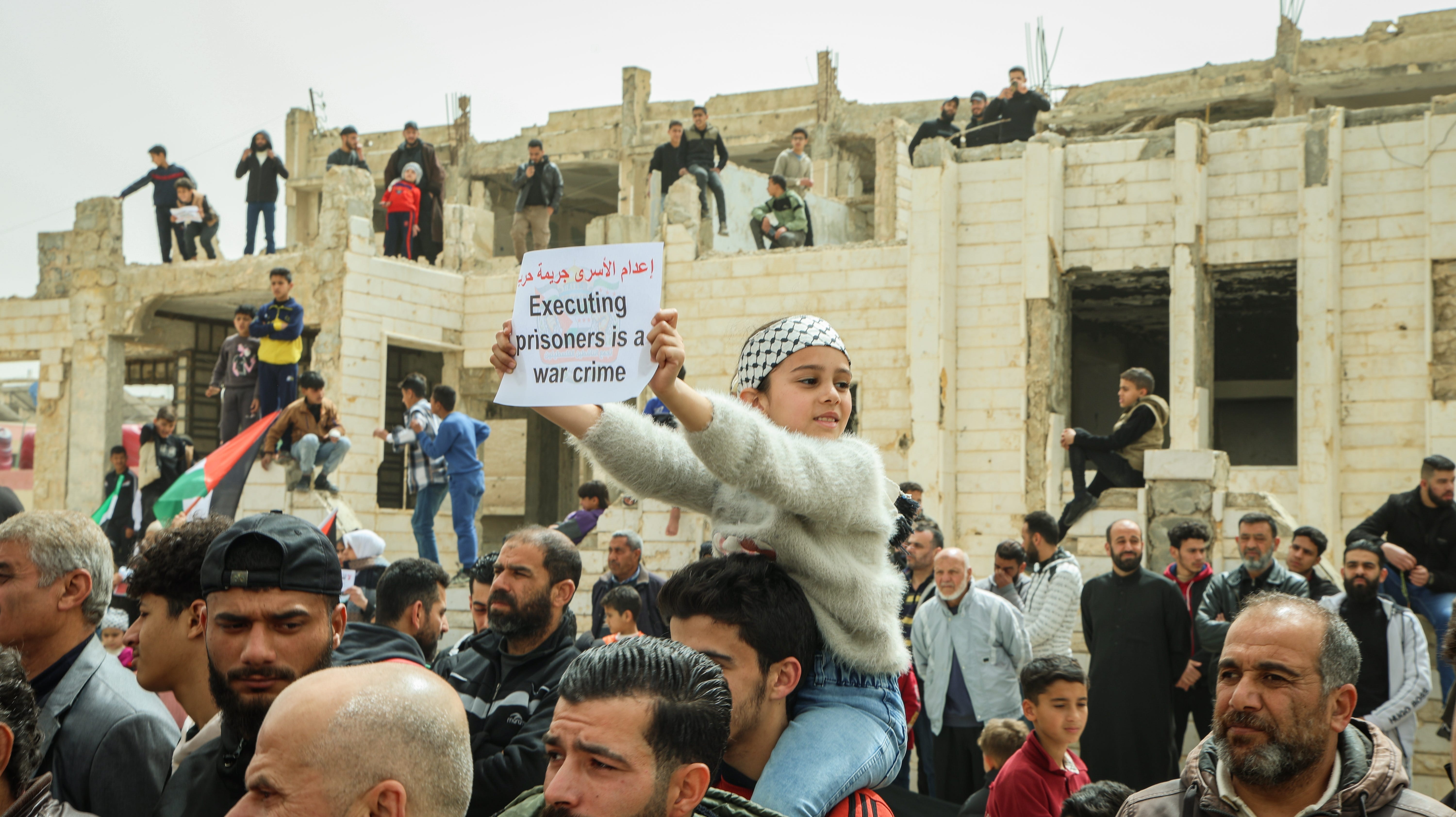
On March 30, 2026, Israel’s Knesset passed a law allowing the death penalty for Palestinian prisoners. This moment forces a critical question: Does international law still apply in Palestine? Increasingly, it feels as though the answer is no.
As many hoped for international pressure to prevent such a decision, the Knesset passed the bill by 62 votes to 48. Prime Minister Benjamin Netanyahu personally attended the vote, while far-right minister Itamar Ben-Gvir celebrated its passage. For Palestinian prisoners and their families, this vote did not mark a new beginning: it felt like an irreversible continuation of suffering.
I am not shocked that Palestinians continue to be killed; they have been targeted for years. Children have died in hospitals, journalists have been killed while doing their work, and even as I write this, I receive another notification: a Palestinian woman named Rawan has been killed in central Gaza. Palestinians have been killed in their homes, in the streets, in hospitals, and in schools. And now, it seems, they will also be killed in prisons.
Israel currently holds approximately 9,500 Palestinian prisoners, about half of whom are detained without charge. Among them are between 53 and 75 women and roughly 350 to 450 children. Since October 2023, following Israel’s genocide in Gaza, the number of detainees has risen significantly, with men arrested at checkpoints, in hospitals, and from their homes.
Human Stories
I feel sorrowful even mentioning prisoners as numbers, because each one carries a story, a life interrupted. Palestinian prisoners have spent years waiting to embrace freedom, to return to their families, their children, and their land. Yet this law replaces that hope with the threat of punishment and death.
Since the announcement, I have found myself thinking constantly of the prisoners and their families. How do they feel? Are they afraid, or have years of imprisonment dulled their sense of fear? Has death become easier to face than life under constant control?
I have written before about conditions inside Israeli prisons. I once spoke with a relative who endured months of detention, and through his account, I began to understand the reality inside: the darkness, the hunger, the deprivation of basic human needs. His story is only one among many. He is free now, but countless others remain—elderly men, women, children—living unseen lives behind prison walls, their stories unheard.
Perhaps this decision was expected—those capable of genocide seem capable of anything—but its reality is still overwhelming. Unbelievable. Unbearable. How can someone wait years to reunite with loved ones, only to face the possibility of execution? How can the human mind absorb such a shock?
If this law is implemented, it will mark not only a legal shift but a profound failure of international law. It will send a message that human rights do not apply in Palestine: that Palestinians are excluded from protections meant for all humanity. Justice, in this context, appears to depend not on law, but on identity.
I still remember when Al-Ahli Arab Hospital was targeted in 2024. I told my mother, “The world will stop this—they cannot violate international law like this.” But what followed proved how wrong I was. In that moment, I understood something devastating: we exist outside the protections of human rights, as if those rights were never meant for us.
Legal Framework
The Third Geneva Convention establishes clear legal standards: prisoners of war must be treated humanely at all times and cannot be punished without fair and lawful trials. Articles 13, 14, 17, 87, and 99 to 108 reinforce these protections, making it evident that imposing the death penalty in such contexts is neither lawful nor acceptable.
Yet despite these clear rules, reality suggests otherwise. The law itself states that the death penalty applies to those who cause the death of an Israeli citizen out of hateful motives or intent to harm Israel. But this raises an unavoidable question: why does this not apply equally to Israelis who kill Palestinians?
If such a law exists, why are soldiers who have admitted to killing children—such as Hind Rajab—not subject to the same consequences?
Following the vote, Itamar Ben-Gvir celebrated with champagne, declaring that anyone who takes a life would have theirs taken in return. His words framed the law as justice—but for many, it reflects something else entirely.
I spent that night watching the news and scrolling through endless discussions online. My thoughts kept returning to my cousin and her young son. After much hesitation, I sent her a message, trying to reassure her: “Be strong, your husband will be okay.”
She is only 22 years old. She was married just months before the war began. Her son is about to turn three. Her husband was detained in 2024 at Al-Ouda Hospital and later transferred to Ofer Prison, one of the harshest facilities since October 2023.
Waiting Life
She counts the days until she can see him again, holding onto hope alone. When a ceasefire was announced, she told me, “I will prepare a tent for us to live together.” She shows her husband’s photo to her son, trying to keep his memory alive.
“My heart breaks when my son sees other children with their fathers—he thinks he doesn’t have one,” she told me.
For nearly two years, she has lived between hope and despair, waiting for his return. Now, this law threatens to take even that hope away. Her story is just one among thousands—9,500 lives suspended in uncertainty.
Voices Heard
“I embrace from the womb of death, from the heart of suffering,” said Naji Al-Jafarawi, who was released in October 2025. Speaking from experience, he described the harsh reality of prison life and warned of the devastating consequences this law could bring.
What deepens the sorrow is the awareness that the world may react briefly—speaking, sharing, mourning—but ultimately allowing such policies to proceed.
Awareness alone is no longer enough. The world must act—must speak, protect, and take concrete measures. The law may have passed, but the prisoners, their dreams, and their families must not be silenced.
Through this article, I call on countries across Europe and beyond to take action. Raise your voices, take to the streets, and demand that this law not be enforced. Justice and human rights must not be selective—they must be universal. For the sake of humanity, they must apply to all.

Israel‘s law is anti-humanity.
Zionist Israel has no law, no humanity, just raging incoherent vengeance.