


I used to think exile began at borders. I thought it started with a suitcase, an airport, a foreign language, and a final glance through a departing window. I thought exile required distance. I was wrong.
Sometimes exile begins while you are still standing on the same street where you learned to ride a bicycle. Sometimes it begins when the city remains in place, but life inside it becomes unrecognisable. Sometimes it begins when your homeland no longer offers a future, only survival.
Today, a Palestinian schoolgirl was killed on her way to sit for her final secondary school examinations. She was not crossing a border. She was not fleeing a war zone. She was not seeking asylum. She was simply walking toward her future.
In another country, this would have been an ordinary morning. A girl carrying a pen, reviewing forgotten notes, worrying about grades and university applications. Instead, she became another name in a long list of interrupted lives.
The news will report her death as a number. But what was killed was not only a girl. A future doctor was killed. A future teacher. A future poet. The version of herself she might have become ten years from now was killed before she had the chance to meet it.
Occupation does not only destroy bodies. It destroys trajectories. It attacks the fragile bridge between the present and the future.
Internal Exile
For years, Palestinians have been told that exile is something that happens after departure. Yet many of us learned another truth. Exile can begin long before leaving. It begins when your dreams become impossible to plan. When schools become shelters. When universities become ruins. When every ordinary act carries the possibility of death.
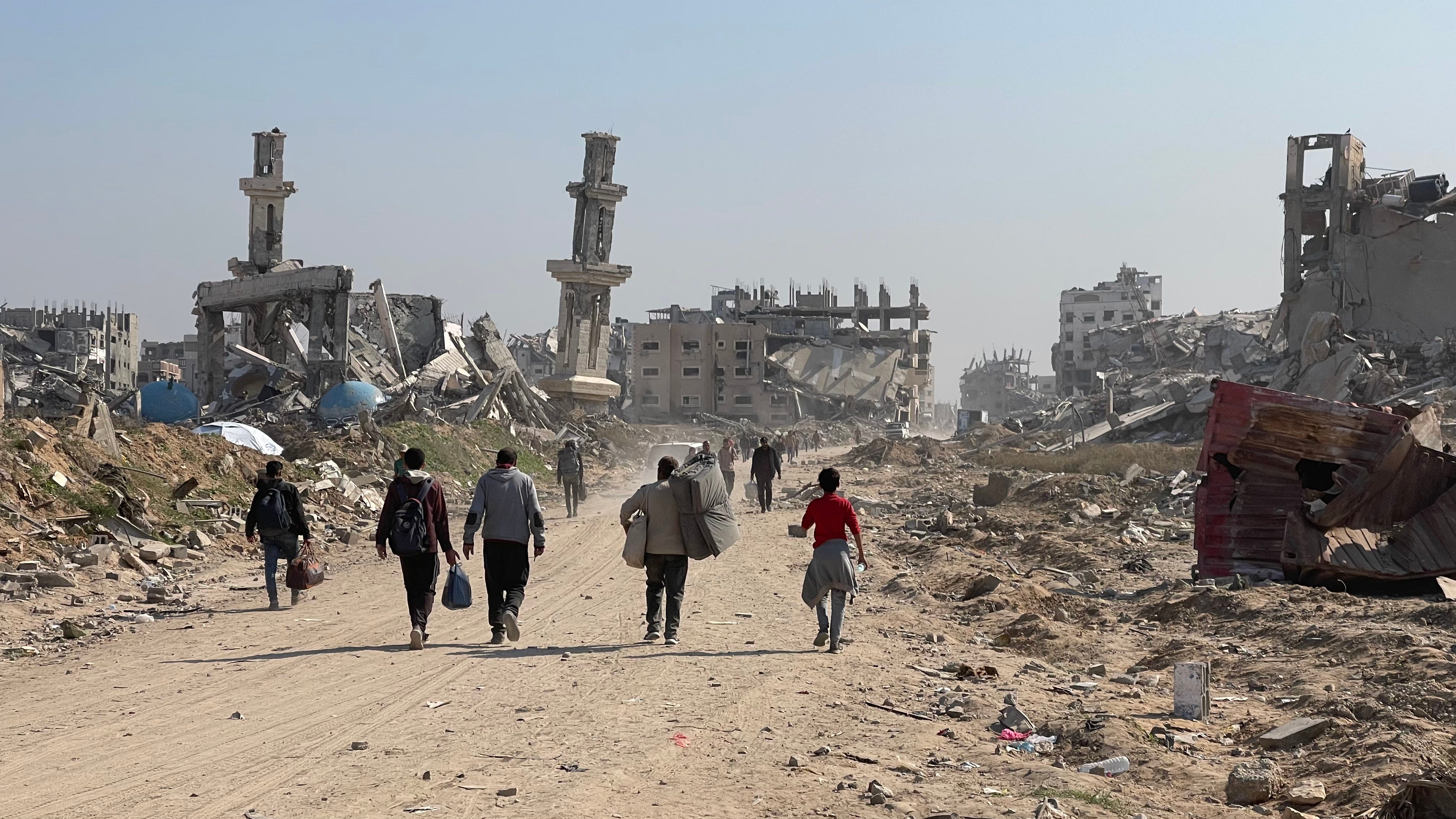
This is the quiet architecture of internal exile. You remain in your homeland, but your homeland is systematically transformed into a place that struggles to sustain life. The familiar becomes unfamiliar. The streets still carry their names, yet they lead somewhere else entirely. Home ceases to be a place where a future can be imagined; it becomes a place where survival must be negotiated every day.
The violence is not only physical. It is existential. A people are gradually pushed into a condition where they are made to feel temporary on their own land. Not necessarily through direct expulsion, but through the relentless dismantling of everything that makes life liveable. A university degree becomes uncertain. A career becomes uncertain. Marriage becomes uncertain. Tomorrow itself becomes uncertain.
The result is a strange and devastating form of displacement: remaining where you are while becoming estranged from the possibility of living there.
The world often speaks about Gaza through the language of catastrophe. It sees ruins, statistics, humanitarian crises, and emergency aid. What it rarely sees are the futures buried beneath the rubble. It does not see the student who wanted to study medicine. The writer drafting her first manuscript. The musician saving money for an instrument. The child rehearsing a dream that now exists only in memory.
Separated from Life
An occupation does not merely destroy a place. It attempts to redefine it. To transform a homeland into a landscape associated only with death. To make the world forget that beneath every collapsed building there once existed ordinary ambitions, ordinary love stories, ordinary lives.
Perhaps this is the deepest form of exile. Not leaving your country, but watching your country be reshaped into something the world no longer recognises as a place meant for living.
And yet Palestinians continue to insist on imagining a future. They sit for exams during bombardment. They write poems beside mass graves. They plant flowers beside ruins. They continue to dream in a geography designed to suffocate dreams.
Maybe that is why the schoolgirl’s death feels so unbearable. Because she was not killed while fleeing her future. She was killed while walking toward it. And perhaps that is the most painful definition of internal exile: not being separated from your homeland, but being separated from the life you were supposed to have within it.

A beautiful piece -very moving. Also good because it speaks truth to power -Palestinian students will still achieve -maybe not in the way they expected, but nevertheless achieve.