

By Rida Thabet
Welcome to the Gaza Strip, summer 2026. In other corners of the Mediterranean, June is a season of sun-drenched beaches, iced coffees and family picnics. Here, under the suffocating ceiling of a nylon tarp, summer is an entirely different kind of beast. It is the third summer of a war that has levelled entire lives to the earth, leaving behind over 61 million tonnes of toxic rubble—a vast, grey landscape of crushed concrete under which thousands of missing, decomposing bodies still rest.
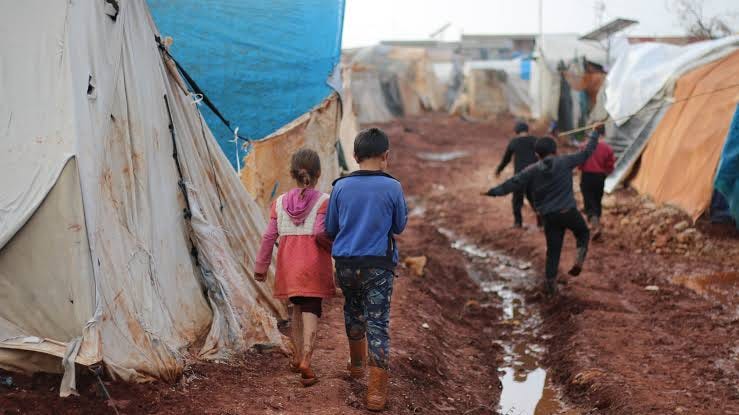
For the displaced, returning home is a dream. Following years of shifting yellow blocks, over 60 per cent of Gaza’s land now falls within the restricted “Death Zone” or its newly expanding military buffer zones. The human overflow has been squeezed into tightly packed tent encampments. These shelters, cobbled together from cheap plastic sheets, offer no protection. As the morning sun hits the tarp, the tent transforms into an absolute greenhouse. By 8am, the air is thick enough to bake bread. “No matter what I tell you, I can’t describe what life is like in tents,” says a displaced mother living in the al-Mawasi zone. “In the winter, we drowned in rain; now, we are baked alive.”
To survive the indoor furnace, men have abandoned the tents entirely at night, opting to sleep in the open air. It has become a perfectly ordinary part of the morning routine: if you walk down the road early enough, you will see groups of men stretched out on thin mattresses by the roadside, twisted into various, accidentally hilarious, yoga-like positions just trying to catch a stray breeze.
But sleeping outside requires negotiating with Gaza’s new rulers. Since the infrastructure is completely shattered, wastewater runs freely between the tents, and mountains of solid waste sit right next to where children play. In the old days, municipalities sprayed the swamps to kill the larvae before the heat hit. Now? The insects operate like elite military units working in perfectly coordinated shifts.
The morning shift belongs to the flies. They don’t just buzz; they engage in psychological warfare, aggressively kissing people’s faces until they are forced to stand up. In some camps, they are joined by heavy artillery: scorpions and snakes.
At night, the air belongs to the mosquitoes, which attack in dark, heavy clouds, biting aggressively until they are bloated with the blood of tired, malnourished Palestinians.
Pest Siege
Then come the fleas. Unlike the mosquitoes, fleas are the cowards of the insect world: they hide deep in the seams of your clothes, completely invisible. They bite around the clock, working all shifts simultaneously, leaving children’s bodies covered in angry red welts that take weeks to heal.
If the bugs are the infantry, the rodents are the commanders. A year ago, these families endured a brutal, manufactured starvation campaign. Naturally, anyone who manages to buy or receive aid now guards a small food reserve like gold. But mice have evolved. They can bypass thick plastic, iron wires and wooden stilts.
“They walk on our faces while we sleep,” a displaced father said. “The rats eat the tents from underneath.”
They have lost all fear of humans. A 68-year-old diabetic grandmother woke up to find her bed soaked in blood after a giant rat gnawed at her toes. “Rats live with us in these tents,” she said. “They eat what we eat, sleep where we sleep.” When people try to chase them, the rodents simply execute a flawless disappearing act, slipping back into the endless concrete ruins that surround the camps.
Beyond the heat and the pests, the ultimate casualty of the plastic city is human dignity. In a camp where thousands of tents touch one another, privacy has become an unattainable luxury.
Every family’s story is accidentally shared because plastic sheets do not block sound. To change clothes or take a makeshift bath, a family must coordinate a complex tactical exit, with everyone waiting outside in the blazing sun so one person can clean themselves in the tent.
It is a life stripped down to its barest, rawest elements, wrapped in a dark, absurd comedy of survival. These are the forgotten people of Gaza, trying to survive a torturous summer in which even a whisper is public property and a good night’s sleep is a battle won against a rat.
Rida Thabet is an education specialist working for the United Nations Relief and Works Agency (UNRWA) in Gaza, Palestine.
💔💔💔💔💔💔💔💔💔💔💔😢😢😢😢😢😢😢😢😢😢😢😢💔💔💔💔💔💔
.
Among the relentless vignettes of horror coming out of Gaza – and from other such venues on the front lines of the Israeli-U.S. Imperial Horror Factory – it is rare to find one particular report that propels itself to the forefront of all the individual horrors being casually perpetrated by the Israeli-U.S. Epstein Cabal on a daily basis.
.
In this instance, however, this present report on “The Furnace of Gaza’s Tent Camps”, and the plague of rats, flies and fleas to which the people of Gaza are being daily subjected, actually manages to do so.
.
I would implore everyone who reads this report – and all the other reports of the horrors coming out of Gaza - to, once and for all, cease and desist from saying that what is happening in Gaza is a "humanitarian crisis" about which they are "very, very sad".
.
This is NOT a fucking "humanitarian crisis". This is a Crime Against Humanity of Unimaginable Proportions being casually carried out before our very eyes on a daily basis, as though it were the most normal thing in the world. And it is being perpetrated by identifiable criminals: the Ethnosupremacist Zionist State of Israel in collusion with the Epstein Class of the Global North and the Anglosphere.
.