

By Hend Salama Abo Helow
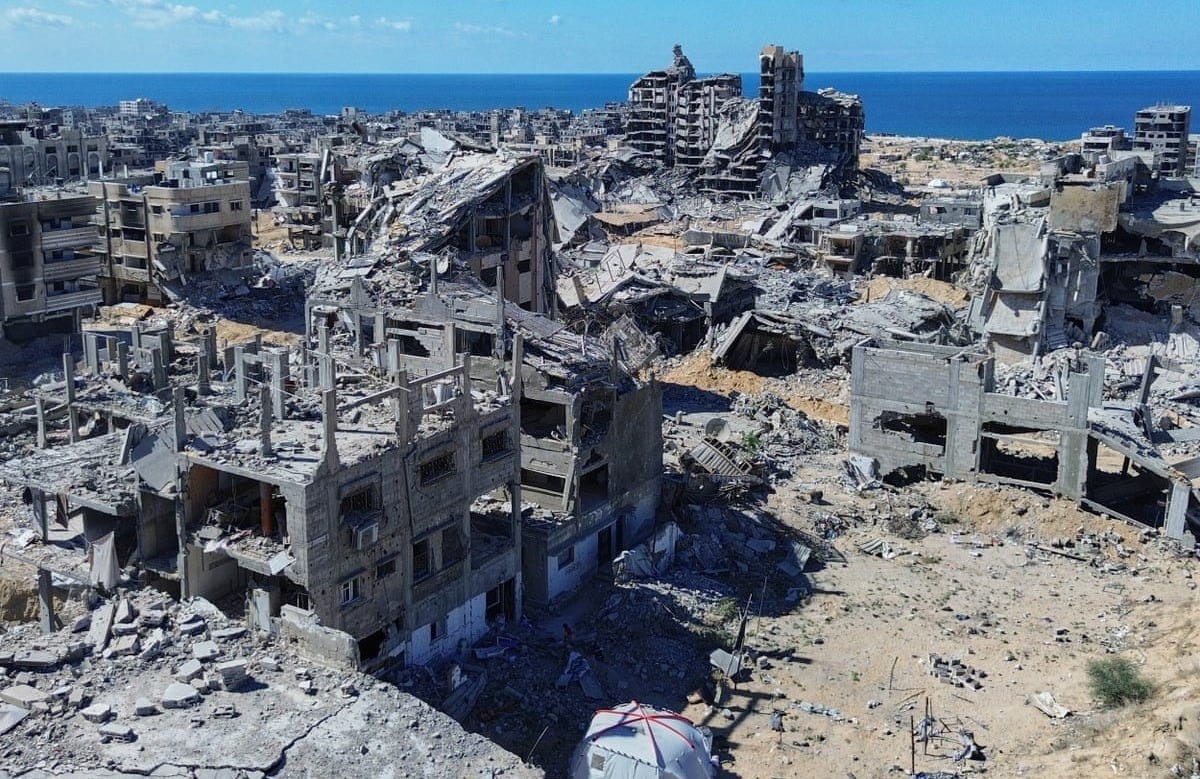
I have been displaced twice, bombed once, and survived death countless times. Yet, I am among the luckiest here in Gaza.
One of the deadliest memories I hold—painfully and unshakably—is being on the verge of death. It was in August 2024. It wasn’t the only time, but it was the most horrific. During the daylight of August 10th, I was trying to ignore my horrors and engage in something I love. I started reading the book ‘Letting Go: The Pathway of Surrender’ by David R. Hawkins. I won’t lie; it was an attempt to meaningfully let my anger, horrors, and grief go. I was trying to heal amidst a war-battered life.
At midnight on that day, I was chatting with a friend of mine about how life in Gaza is always blended between hope and despair. My brother Mohanned was sitting in front of me, following the news. The rest of my family was asleep. Out of nowhere, screeches filled the air, mingled with the cacophony of drones. I thought it was a personal conflict between neighbouring families. They had been displaced for more than nine months by then and I thought that they were releasing pent-up anger, frustration, and grief in the form of igniting problems over trivial things. I turned a blind eye and continued chatting.
But then, the people’s voices drowned out the rattling drone.
I suddenly found myself among crowds. I couldn’t catch my breath. There were over 400 people crammed into my house, wishing for nothing but survival and safety. Until that point, I didn’t know what was happening. I couldn’t find my parents among the scared faces. I couldn’t even reach my room to wear my hijab al-salah in case of urgent evacuation. The only thing I could feel was a tremendous threat, leaving everyone, racing against time, minds unravelling with unhinged thoughts.
I asked one of the neighbours, “What’s happening? Why are you here?”
He said that the IOF threatened to bomb one of our neighbour’s houses.
I knew what kind of devastation that would inflict. Houses in our camp aren’t well-constructed—built from zinc and cement. They cling to one another. So, any raid on one house would cause massive damage to the entire camp. Not to mention the blood spilt, the flesh burnt, and the pain left behind.
I searched for my mother and father to inform them, but we were lost in the crowd. My brothers hurried to offer water and chairs, but no matter how rich we were in water and furniture, it couldn’t meet the needs of over 400 desperate souls.
Hours passed slowly, hearts forged in anxiety. Men rallied outside, in the garden. Women and children packed inside the hall of my house. I was sitting on the stairs when the IOF soldier called out some names as a warning—to flee north of our neighbourhood. Which meant we had to do so too—our home—was located in the red zone.
People scrambled to survive, not knowing where to go. But still, they wanted to survive. We, too, wanted to survive. Families were fleeing death, while death lurked around every corner.
I stood, feeling powerless, not knowing what I should do—abandon my home and break the promise I once made to myself that I would never leave it? Or follow my instincts to survive?
My father’s voice echoed; “Hurry up! Let’s go! They’re gonna bomb any moment now!”—reminding me that my sister and her two children were sleeping on the third floor.
Seconds. Seconds. I just wanted seconds to snatch my sister from imminent death. How could the heartless drone operator ever fathom that for Gazans, seconds are the thread between life and death?
Luckily, I managed to awaken her and the children. We flew down the stairs—only to be stunned, upon reaching the entrance, by a warning airstrike.
Any movement or attempt at survival could cost us our lives.
The IOF doesn’t usually warn before raiding, but it was an exceptional time—because they were aware that the wide-scale massacres would be incalculable if there were no warnings. No one was in the region but us. It was a ghost town.
Lethal thoughts wouldn’t leave me alone. If we were killed, no one would know. No one could reach us. I hate loneliness. I hate darkness. I hate death.
What if all came in one cup?
I chose to pause my brain, crouched in a corner on the first floor, and kept my eyes fixed on safeguarding my family. There’s a Gazan saying that says: “Those who shelter on the first floor have a higher chance of survival than those on other floors.” Yes—we measure our death expectancy.
But the myth was broken when the IOF struck the closest house to us—not the designated one.
I know too well how deceptive they are, yet every time I am stunned by their new tactics of humiliation and horror.
Luckily, the inhabitants had already fled.
Heart-wrenchingly, when they return, they will find no home.
The airstrike shook the earth beneath me. Shattered the glass. Pierced the walls. Burnt the trees. For seconds, I didn’t know if we had been hit. I couldn’t really know if I was alive or dead. We were over 21 people crammed together.
I didn’t hear a single voice. After some minutes there was.
I couldn’t breathe. I couldn’t move my limbs. I couldn’t see anything but a cloud of gunpowder. It was like a hurricane—storming and absorbing everything in its path.
I scanned who was around. Everyone had slight injuries. Everyone was horrified. Trembling.
I didn’t hear or see my father.
I ran. I ran with all my strength. The very limbs that moments before felt chained helped me fly—unaware that they were bleeding. I didn’t feel the pain—my fear for my father outweighed everything.
Shrapnel still rained. Walls still fell apart.
My father was passed out on the stairs—suffocated from the lethal stink of phosphorus bombs and gunpowder. A paramedic, himself displaced from northern Gaza and sheltering with us, snatched my father out to a clear area and gave him urgent first aid.
Local media couldn’t locate the exact strike at first. So, it wrongly reported that our house was bombed—sending my sister who is living abroad, into a storm of panic. Later they corrected it—but the damage was done.
We survived—but until now, I haven’t been able to process that bloodcurdling night. The memory bleeds pain again and again.
As the sun rose, people returned to their homes—shocked and devastated by the scale of destruction. Especially the owner of the demolished house. He didn’t even get the chance to grab his essential documents or saved money.
Everything was burnt.
Our hearts too.
All of the infrastructure—water pipes, sewage canals, and internet—was demolished. We were isolated from the world. Unseen, unheard, unrecognised.
Still—we woke up and renewed our cling to life. Cleaning rubble. Finding ways to fix what had been shattered. It became a collective effort with neighbours defying a gruesome reality, each in their own way.
Our homes were bombed? So, we began to rebuild the next day.
For us, it took weeks to reclaim a livable space. But the injuries marked our bodies. Every time I look at them, a cascade of horror replays in my mind.
During the forced communication blackout, my sister Intimaa—who had travelled years ago to the USA to complete her PhD—adopted a cat and named her after me: “Hend.” She talked to her. Treated her as if she were me. She found in that cat the warmth and comfort the occupation had denied her. She bought her treats. She took her on vacations.
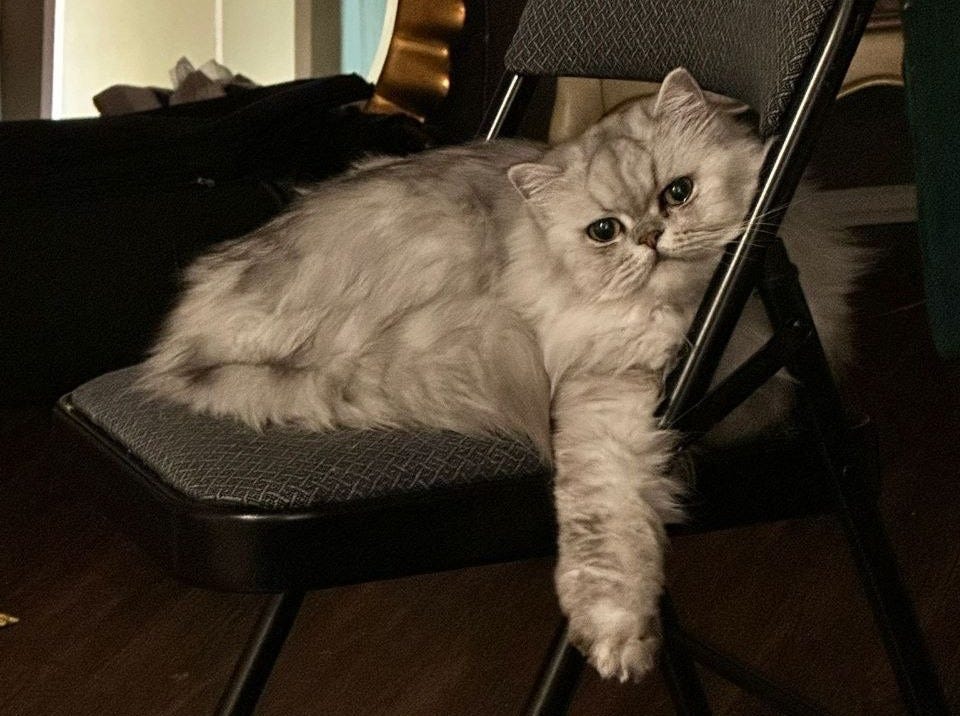
Weeks passed before we could reconnect. And once I found out, I felt… jealous. That little cat was safe while I had been under fire—despite us sharing the same name. She had my sister’s company while I spent weeks forcibly isolated from neighbours and friends.
Yet, somehow, I am happy. Amidst the horror, a new life, a tiny grace, emerged—a cat named after me. It may sound ridiculous to others, but Gazans in the diaspora fight double battles—suspended between two worlds. Never putting down their phones, following news with dread, living in constant anxiety.
Still—they try to stay connected to their families. And my sister did so by raising a cat in my name.
And yet… the journey of reading ‘Letting Go’ came to a standstill. I now link it to that night—trapped between death and the desperate attempt to heal.
In Gaza, everything is drenched in death.
Even our efforts to survive.
Hend Salama Abo Helow is a researcher, writer and medical student at Al-Azhar University in Gaza. She is also a writer with We Are Not Numbers and has published in the Washington Report on Middle East Affairs, Institute for Palestinian Studies, Mondoweiss and Al Jazeera, Prism, Electronic intifada, and truthout. She believes in writing as a form of resistance, a silent witness to atrocities committed against Palestinians, and a way to achieve liberation.
Thank you for such a vivid story of your life. I have no words but I am sorry for my government’s complicity in the Genocide against your people. I send my love and admiration to you all 🇵🇸🇵🇸🇵🇸
I’m heartbroken, confused, and very angry. But, the Palestinian victory is coming, it is very near.