

By Ohood Nassar
In the Gaza Strip, where bombardment has become a constant backdrop to daily life and the line between survival and death grows increasingly thin, countless stories emerge that reflect the scale of civilian suffering.
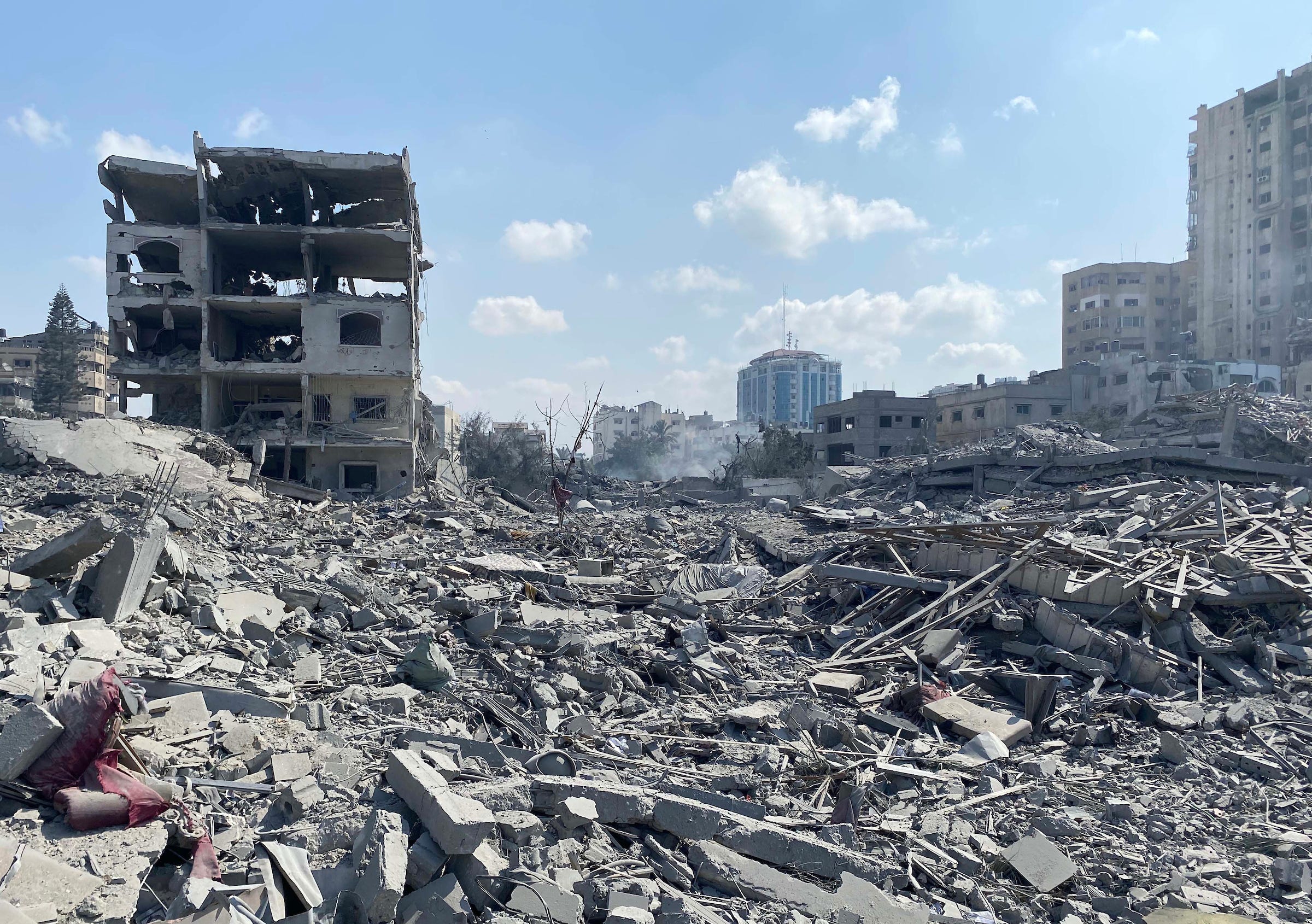
Among them is the story of Mohammed Jahha, a young Palestinian from Gaza City who survived after being buried beneath the rubble of his family home and mistakenly believed to be dead. His experience encapsulates the realities of war in Gaza: the destruction of homes, the collapse of basic services, the dangers of rescue efforts, and the extraordinary struggle to stay alive.
Mohammed Jahha is from the Al-Tuffah neighborhood in eastern Gaza City. Recalling the early weeks of the military assault on the Gaza Strip, he says his family home became a refuge for approximately 150 people, including relatives and displaced families who had fled nearby areas in search of safety.
As the bombardment intensified, the family began searching for a safer place. Like many others, they attempted to move to shelters, hoping to escape the constant threat of airstrikes. However, schools, hospitals, and other public buildings had already become overcrowded with thousands of displaced people. Conditions were dire, with little space, limited resources, and no real guarantee of safety.
Meanwhile, Mohammed’s uncle and his family sought shelter at a school operated by the United Nations Relief and Works Agency (UNRWA) in Gaza City’s Al-Daraj neighborhood. But even that refuge proved unsafe. The school was bombed, forcing those sheltering there to flee. With nowhere else to go, many eventually returned despite the risks.
The Strike
On December 6, 2023, tragedy struck the Jahha family directly. Their home was hit in an attack that killed 117 people. Mohammed remembers that there had been no warning. Family members and displaced people inside the house were going about ordinary moments when, within seconds, the building collapsed into rubble.
Mohammed was buried beneath the debris along with many of his relatives. Unconscious and severely injured, he remained trapped as neighbours desperately attempted rescue efforts. Working with little more than their hands and basic tools, they managed to pull out several survivors and victims. Because ambulances were unavailable, those they rescued were transported on donkey carts.
The rescue operation itself soon became dangerous. According to Mohammed, nearby homes and a mosque were also targeted during the search efforts, forcing neighbours to abandon their work for fear of further strikes. It was not until the following day that they were able to return and continue digging through the wreckage.
When they eventually found Mohammed beneath the rubble, they believed he was dead.
With extremely limited resources and surrounded by devastation, the neighbours recovered his body and began preparing him for burial. They washed him, prepared him for the funeral prayer, and dug a grave nearby. Family members and neighbours gathered to perform the prayer over what they believed was another victim of the attack.
Then something unexpected happened.
During the funeral prayer, Mohammed’s body suddenly moved.
The movement stunned everyone present. Moments earlier, they had been preparing to bury him. Now they realised he was still alive.
Neighbors immediately attempted to provide whatever first aid they could. Yet medical resources were almost non-existent, and movement through the area remained dangerous because of ongoing military operations and the presence of tanks nearby. Mohammed was taken to a neighbouring house, where he remained unconscious and bleeding for two days without adequate medical care.
As his condition deteriorated, those around him made the difficult decision to transport him to a medical point despite the risks. Because fuel shortages and restrictions had effectively eliminated normal transportation options, he was again moved by donkey cart.
The journey was perilous. Shelling continued in the area, and gunfire could be heard overhead as volunteers attempted to bring him to safety.
At a nearby medical point, Mohammed received emergency treatment before being transferred to Al-Ahli Arab Hospital in western Gaza City. There, doctors fought to save his life as he slipped into a coma that would last for three months.
After Survival
When he finally regained consciousness, he had no memory of who he was.
He could not remember his name, recognise members of his family, or understand what had happened to him. Confused and frightened, he repeatedly asked medical staff for answers. Eventually, they told him the truth: most of his family had been killed in the attack that destroyed their home.
Slowly, fragments of memory began to return. Along with them came the painful realisation of everything he had lost.
Mohammed says he lost nearly his entire family in the strike. The only surviving relative from his immediate family was his younger sister, who was also seriously injured. She underwent multiple surgeries inside Gaza, but doctors later determined that she would need treatment abroad to complete her recovery.
Today, Mohammed and his sister live in a school that has been converted into a shelter for displaced people. The home they once lived in no longer exists, and the life they knew before the war has vanished.
He says that silence has become one of the hardest things to endure. Quiet moments often bring back memories of family members he lost beneath the rubble. Despite the grief and trauma, he continues to move forward, determined to care for his sister and preserve what remains of his family.
Mohammed Jahha’s story is not an isolated one. It reflects the reality experienced by thousands of civilians across Gaza, where homes become targets, rescue efforts turn into life-threatening missions, and survival itself often depends on chance. Amid widespread loss, injury, and displacement, stories like his serve as a living record of an ongoing humanitarian catastrophe and the resilience of those struggling to endure it.
Ohood Nassar is a journalist and teacher from Gaza. She has written for We Are Not Numbers, New Arab, Al Jazeera, Institute for Palestine Studies, Electronic Intifada, and Prism.
It is beyond belief that the so called west, all in unison, actively or tacitly support this savaging of human life.
This story as well as thousands of others is heartbreaking. Poor Mohammed and his sister. I grieves me to think that this world is full of cruel monsters with hate in their hearts like Israel and the USA that are classed as human beings and just want to destroy and on the other hand caring human beings who go above and beyond to help people of all races.