


Since I was a child at school, Land Day was a date on the calendar that we always celebrated—a moment of commemoration, a lesson in Palestinian history, a reminder of resistance rooted in soil and in Palestinians’ hearts and minds. It marked the 1976 uprising of Palestinians inside Israel against land confiscation. We spoke of it as inheritance, as memory, as principle.
After more than two years of genocide and displacement in Gaza, I now understand what land truly means. For Palestinians, land is never just geography; it is memory made visible, heritage that breathes, and identity that cannot be rewritten. It is the first story we hear and the last truth we hold onto when everything else collapses.
Mahmoud Darwish once wrote, “We have on this earth what makes life worth living.” For years, those words were quoted as poetry. Today, they read like defiance carved into stone. What makes life worth living is not comfort, nor certainty—it is belonging. It is the stubborn insistence that we are of this land and that it is of us, no matter how violently that bond is tested.
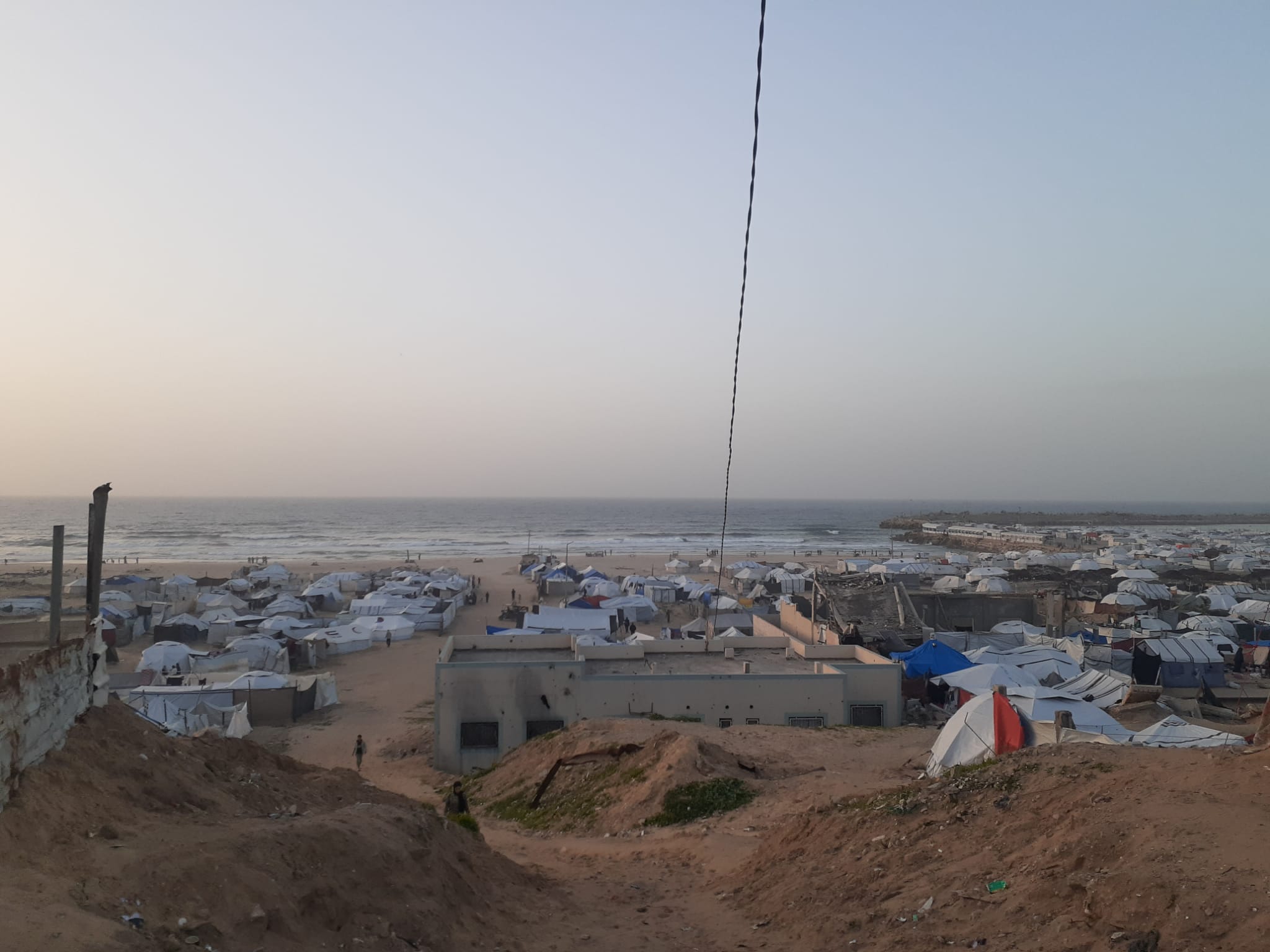
Over these past years, displacement has taught us that land is not something you simply own—it is something you live through and within. When homes are erased, land becomes the last witness. When borders close, land becomes the only constant. When people are forced into tents, it is the land that absorbs grief, hunger, and endurance. It holds the weight of footsteps that refuse to disappear. It listens when the world turns away.
Land Day is not about olive trees alone. It is about the refusal to be uprooted. It is about the quiet, unbreakable decision to remain, even when remaining seems impossible.
Ghassan Kanafani warned that the Palestinian cause is not merely a story of loss, but a struggle against erasure. In his vision, land was never nostalgia—it was responsibility. Something you either defend or lose entirely. After the genocide, that lesson is no longer philosophical. It is immediate, brutal, and undeniable.
What we are living through has made one truth unmistakably clear: the attempt has never been only to control land, but to sever people from it—emotionally, historically, and physically. To make us forget. To make the land feel distant, foreign, unreachable. Genocide accelerates this severance: displacement without return, destruction without rebuilding, death without mourning.
And yet, despite everything, Palestinians remain tethered.
There is something almost sacred in this tethering. It is not fragile. It does not weaken under pressure. It hardens. It sharpens. It becomes clearer with every attempt to erase it. The more destruction unfolds, the more the connection deepens—not as an abstract idea, but as a lived truth that pulses through daily survival.
Land Day now feels less like remembrance and more like testimony. We are no longer only remembering what was taken—we are bearing witness to what is still being taken, and to those who refuse to let go. We testify that land remembers us even when the world does not. That rubble still carries names. That streets flattened into dust still echo with laughter, footsteps, and life.
We testify that displacement does not dissolve attachment—it intensifies it.
If the lions do not have their own historians, the history of the hunt will always glorify the hunters. It will celebrate those who conquer, who occupy, who erase, while silencing those who endure. This is why storytelling becomes an act of resistance. Not a luxury, not a choice—but a necessity, as Dr. Refaat Alareer said.
Because when we tell the story of our homeland, we are not only preserving memory—we are asserting existence.
We love the story because it is about our homeland. And we love our homeland even more because of the story. The two are inseparable. One feeds the other. One protects the other. In every retelling, we rebuild what has been destroyed. In every word, we return—if not physically, then spiritually, emotionally, collectively.
And this is what frightens those who seek erasure the most: that even in exile, even in displacement, even under unimaginable destruction, the story does not end.
It multiplies.
It passes from one voice to another, from one generation to the next, refusing silence. It lives in the details—the names of villages, the taste of bread, the smell of the sea, the shape of streets that may no longer exist but are still mapped in memory with painful precision.
This is the new meaning of Land Day.
It is no longer confined to a single historical moment. It is not just 1976. It is now. It is every day that a person refuses to forget where they come from. Every day that someone speaks the name of a place that others try to erase. Every day that survival itself becomes a form of resistance.
Land Day has become a language.
A language spoken in resilience, in memory, in refusal. A language that does not require translation because it is understood through experience, through loss, through the unyielding will to remain connected.
After the genocide, Land Day is no longer about land taken in the past. It is about land still being taken—and people still refusing to be uprooted.
It is about the certainty that no matter how much is destroyed, something remains. And that something is enough to begin again.
Because as long as there are those who remember, who speak, who insist, the land is not lost.
It is waiting.
And we are still here.

I am still here with you. I can't pretend I know the horrors you have been through .I've never experienced such tragedy but my heart recoils at the terrible things. Yes let Land Day signify all the good and all the trials and the well deserved good endingto come
your Arab community will survive with dignity.
The connection to the land is a strength, not a weakness. Thank you for a reminder.