


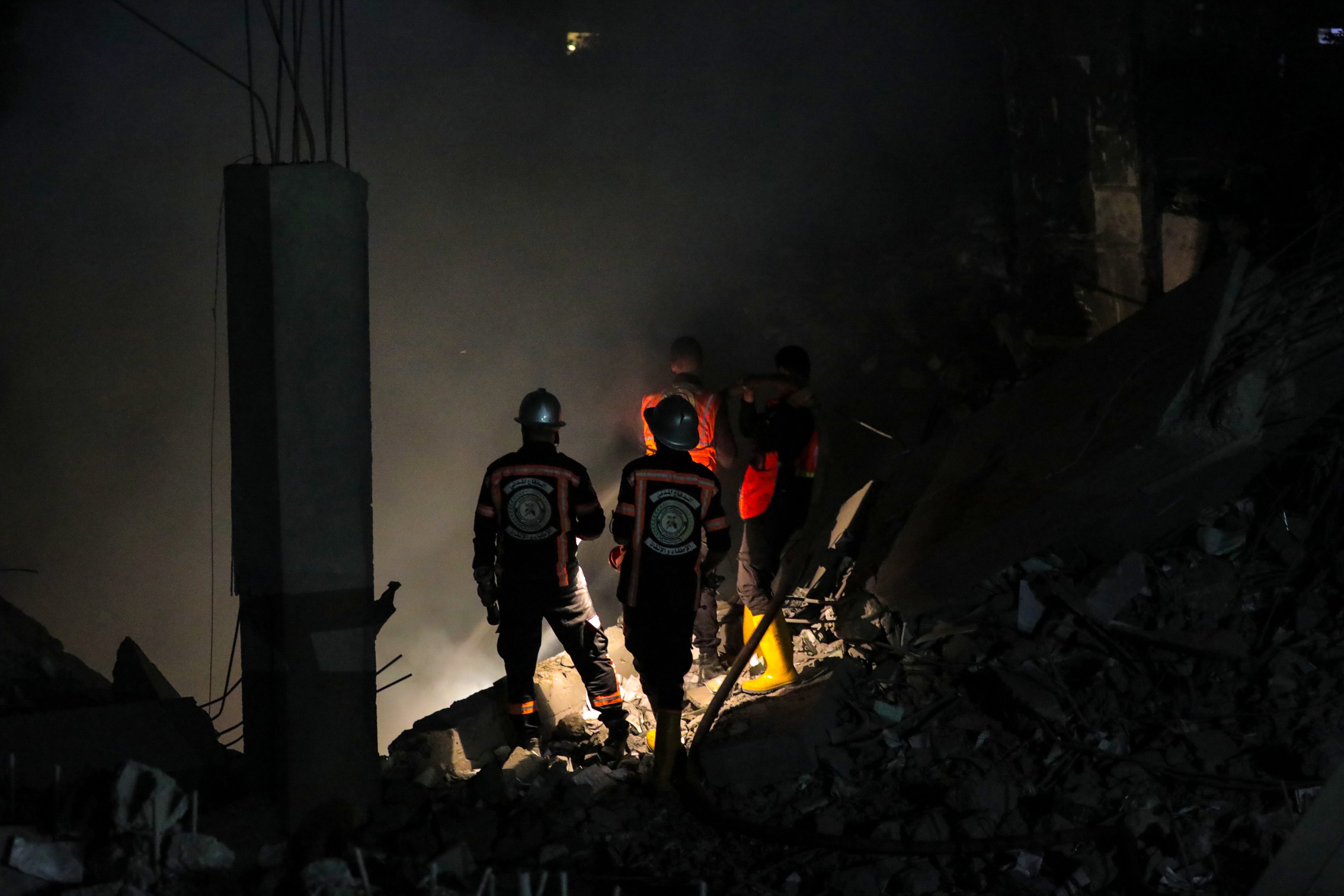
What is Gaza’s most irreplaceable capital?
It is the people it has lost: doctors, academics, scholars, engineers, journalists, imams, physicians, artists, writers, literary figures, and teachers.
In Gaza, devastation is often measured in concrete—the number of homes flattened, hospitals crippled, universities reduced to rubble. Satellites document the destruction with clinical precision, while reconstruction is discussed in the language of costs, timelines, and materials. Plans for rebuilding revolve around cement, steel, and budgets.
Yet the deepest loss unfolding in Gaza cannot be rebuilt through architecture.
What is being erased is human in its fullest sense, and that loss will last far longer than the genocide itself.
When Gaza bleeds, it is not only stone that cracks. It is minds, skills, memory, and moral infrastructure that are struck. A gradual draining is taking place: the loss of those who carried generations of accumulated knowledge. This includes doctors shaped by siege, professors teaching under impossible conditions, journalists documenting devastation while living inside it, and artists insisting on beauty amid ruin.
This is a destruction that does not end with a ceasefire. It strikes at the very capacities that allow a society to recover and endure.
Knowledge erased
At the entrance of the Islamic University of Gaza—now bombed, charred, and surrounded by tents sheltering displaced families—a haunting question emerges: what does it mean to obliterate a university in a place already deprived of opportunity?
Universities are not merely structures of concrete and steel; they are living ecosystems of thought. When lecture halls, laboratories, and libraries are destroyed, it is not simply infrastructure that disappears. It is the future intellectual capacity of an entire population.
Gaza has lost academics who cannot easily be replaced, including specialists in medicine, engineering, literature, and law who studied abroad and chose to return despite the blockade. They came back to build rather than flee.
Some were killed in airstrikes. Others were forced into displacement, exile, or silence.
Their absence creates a vacuum that no one can easily fill. Knowledge, like trust, takes years—often decades—to grow.
According to Gaza’s Government Media Office, more than 193 scientists, academics, and researchers have been killed since October 2023, along with more than 830 teachers and educational staff. The destruction of Gaza’s intellectual class has created an atmosphere of fear that pushes scholars and professionals toward exile while hollowing out the institutions meant to sustain society.
Among those killed was Professor Sufian Tayeh, a physicist and president of the Islamic University of Gaza. So too was Dr. Refaat Alareer, an academic, writer, and English-language poet whose work connected Gaza to the world beyond it. Through his teaching, Alareer helped generations of students learn how to narrate their own lives.
Others were engineers and builders of Gaza’s urban landscape, such as Ahmed Shamiya, whose quiet technical expertise sustained daily life under blockade.
Their deaths are not just individual tragedies. They are ruptures in the chain of knowledge that binds generations together.
Healers lost
The same devastation has struck Gaza’s medical community.
The war has not only overwhelmed hospitals; it has decimated the people who kept them alive. Surgeons operating without anaesthesia, paediatricians confronting malnutrition that erases years of progress, nurses sleeping in hospitals while their families are displaced or killed—many of these professionals are now dead, injured, detained, or psychologically shattered.
More than 1,700 healthcare workers—including doctors, nurses, paramedics, and technicians—have been killed. That is an average of more than two medical workers every day.
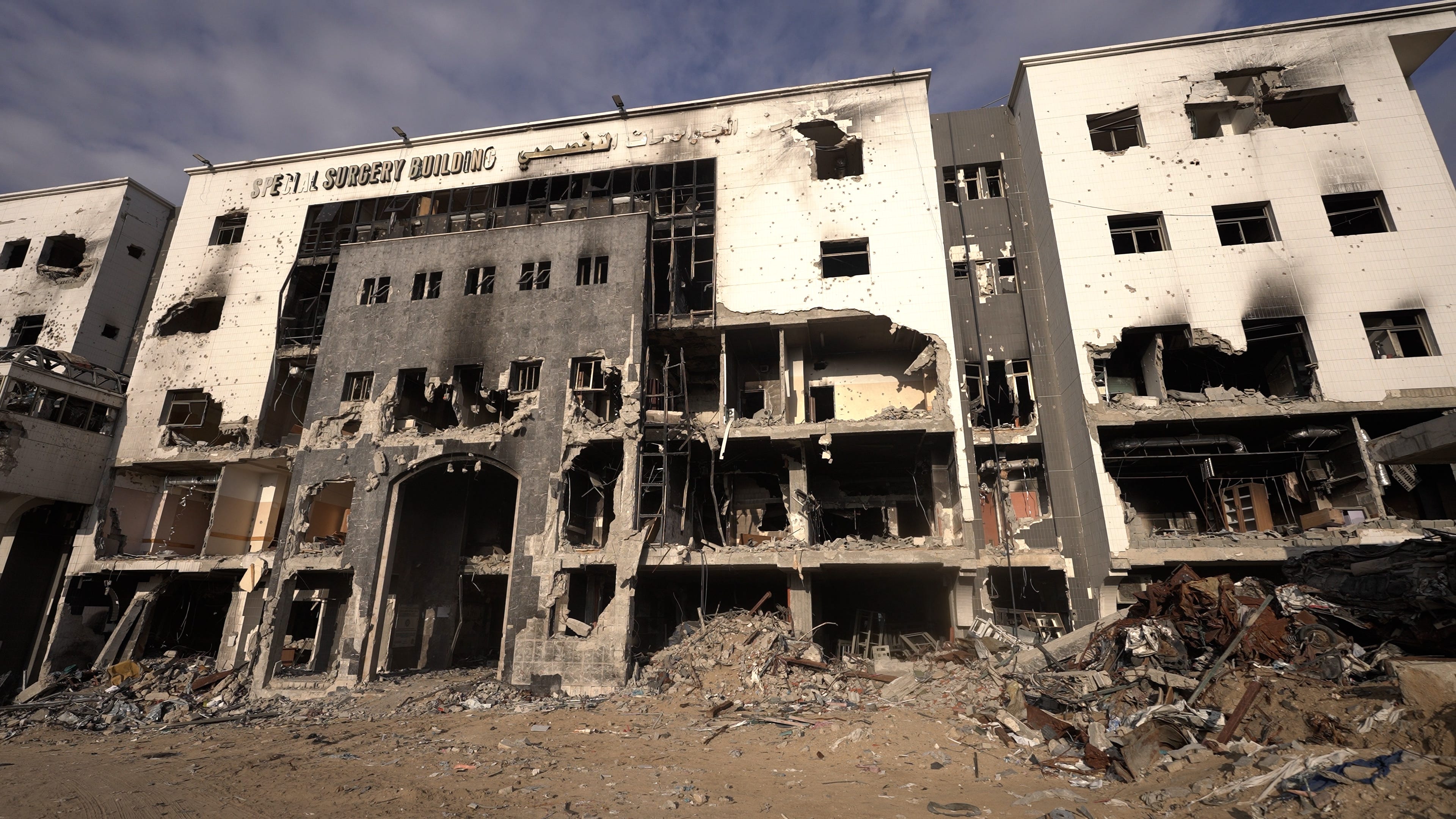
Among them was Dr. Adnan Al-Bursh, a Palestinian orthopaedic surgeon and former head of orthopaedics at Al-Shifa Medical Complex. He was killed while detained in Israeli prisons, marking the loss of one of Gaza’s most experienced surgeons.
Dr. Marwan Al-Sultan, an internal medicine and cardiology consultant and director of the Indonesian Hospital, was another pillar of Gaza’s collapsing health system. Dr. Omar Farwana, a gynaecologist and assistant professor at the Faculty of Medicine at the Islamic University of Gaza who later became its dean, was also killed.
Dr. Medhat Saidam, one of Gaza’s most prominent surgeons and a founding figure of the burns unit at Al-Shifa Medical Complex, was another loss. Young Dr. Maysara Al-Rayyes, who completed his medical degree at King’s College London at the age of 30 before returning to Gaza, was also killed.
Even survival has become unbearable for some of those who remain.
Dr. Alaa Al-Najjar, a paediatrician, lost nine of her children and her husband when an airstrike hit her family home in southern Khan Younis.
At least 350 medical personnel have been detained, with approximately 120 still held in Israeli custody—including Dr. Hussam Abu Safiya, who refused to abandon his patients during a military assault on Kamal Adwan Hospital.
A doctor is not simply someone with a degree.
A good doctor carries experience: thousands of cases, mistakes learned from, instincts sharpened under pressure. When Gaza loses a senior surgeon or an experienced paediatrician, it loses decades of accumulated human knowledge.
Training a replacement is not a matter of months.
It takes generations.
Voices silenced
Journalists and photojournalists in Gaza have also been deliberately targeted, and their loss carries consequences far beyond individual lives.
These reporters were not transient outsiders. They were deeply rooted witnesses who understood the unspoken realities behind the headlines. They knew the families behind the statistics and the streets behind the destruction.
When a journalist dies, more than a voice is silenced. An archive disappears.
No foreign correspondent can fully replace a local reporter who has spent years documenting the rhythms and wounds of a community.
Without these voices, Gaza risks becoming a place that is discussed but not truly seen.
From Samer Abu Daqqa, Hamza Al-Dahdouh, and Roshdi Sarraj at the beginning of the genocide to Fadi Alwhidi—left paralysed by a bullet to his spine—Gaza’s journalists have faced relentless danger.
Ismail Al-Ghoul was killed while reporting, leaving his daughter Zina fatherless. Rami Al-Rifi suffered a similar fate. Hossam Shabat was killed for documenting the war, while Ahmad Mansour burned alive outside Nasser Hospital. Hassan Eslieh was killed by a direct airstrike while sleeping in a tent near the hospital grounds in Khan Younis.
Yahya Sobeih had celebrated his newborn daughter only hours earlier.
Names such as Anas Al-Sharif, Mohammed Qraiqea, Maryam Abu Daqqa, Saleh Al-Jafarawi, and many others—around 228 journalists in total—have been killed while carrying out their work.
With every journalist lost, a part of Gaza’s memory disappears.
Human ruins
The war has carved a quieter, less visible wound: the loss of teachers, writers, artists, and community leaders—the people who help a society make sense of suffering.
They are the ones who explain trauma to children, who reconstruct language amid rubble, who remind a wounded society that it is more than a humanitarian statistic.
This is why the language of “reconstruction” often feels hollow.
Homes can be rebuilt. People cannot.
Rebuilding buildings without rebuilding the people who give them meaning is not recovery. Even if every structure in Gaza were restored tomorrow, the society inside them would still bear the absence of those who are no longer there.
The damage is not only quantitative; it is qualitative.
Gaza is losing its experienced guides. Young people are growing up without professors to mentor them, without doctors to inspire them, without journalists to teach them how to speak truth under impossible conditions.
This absence will echo forward, shaping the kind of society Gaza is forced to become.
The systematic targeting of civilian professionals—medical workers, academics, journalists—creates a strategy of social collapse. It ensures that even if Gaza survives physically, it will struggle to survive intellectually.
It transforms survival into a prolonged emergency.
What remains is a society forced to mourn not only its dead, but also its unrealised futures.
This is the reconstruction Gaza truly needs: the rebuilding of the human being after the loss of an entire generation of elites.
But rebuilding human capital is not like rebuilding a road or a building. It takes decades, sometimes generations. Some losses cannot be replaced at all.
No reconstruction plan can recreate the people who should still be teaching, healing, building, writing, and guiding.
The deepest wound of this genocide is not only what it has destroyed.
It is what it has made impossible.
And that—more than rubble—is what the world must be forced to see.

As i read this I do not know how to process it in my mind. I do not know how to think. I do not know how to be. Do i know who I am anymore? How can this be, this thing that has been done to the Palestinian people in Gaza. How can I live like I once did? Israel, what have you done! Who are you? Your ancestors would hang their heads in shame. You should leave the earth. I will not look away. I will not. I refuse. Those in other places in the world, who are willingly complicit, who are you? What have you done?
I believe this is and has always been the IOF’s intent, to destroy the people and their culture too. Palestine is a daily reminder to them that they are in the wrong, a destructive colonial entity that means nothing but death and destruction. Israel is a morally bankrupt regime, and the existence of resistance in any form proves it. God help the beautiful people of Palestine as they face the greatest evil humans have ever invented, Israel.